Best standing-desk stools for perching at desk height
Most stools sold for standing desks cannot reach one. We ranked these on published seat-height range against the height a 42 in desk actually needs.
By Sawyer V. · Published September 30, 2026
We earn a commission if you buy through the links on this page, at no extra cost to you. It does not affect the order of the picks - the rubric does that, and here is how we are funded. Prices were last verified September 30, 2026.
What we did and did not do
Units we claim to have tested: 0. Everyone in this category says they tested twenty chairs. We have not sat in any of these, and we say so.
What we did instead: compiled every figure each manufacturer publishes, computed the fit ranges from a cited anthropometric table, and linked the source for each number so you can check the arithmetic. Where a manufacturer does not publish a figure, we say that rather than filling the gap. The full method, including what we cannot assess, is here.

A standing-desk stool has exactly one job that nothing else can substitute for: it has to put your seat at the height your desk needs. Everything else - the tilt, the foam, the base - is a refinement on top of that. Get the height wrong and no refinement rescues it.
So that is what we ranked on. Take a 42-inch standing desk, which is roughly the middle of the published range for adult standing elbow height. Subtract sitting elbow-rest height, published as 7.5 to 11.4 inches. The seat has to reach somewhere between 30.6 and 34.5 inches. Then read every candidate's own published range and see who gets there.
The answers are further apart than the marketing suggests. Published ceilings in this field run from 24 inches to 34.6 inches. Every one of these products is sold with the phrase "standing desk" in its title. The full arithmetic, and a table for every desk height from 36 to 48 in, is here.
Quick picks
Ranked on the published rubric. Tap a row for the full write-up; the price button goes straight to Amazon. Every figure in the write-ups is the manufacturer's own published specification, linked at the source. We have not sat in any of these.
| # | Product | Best for | Score | Price |
|---|---|---|---|---|
| 1 | 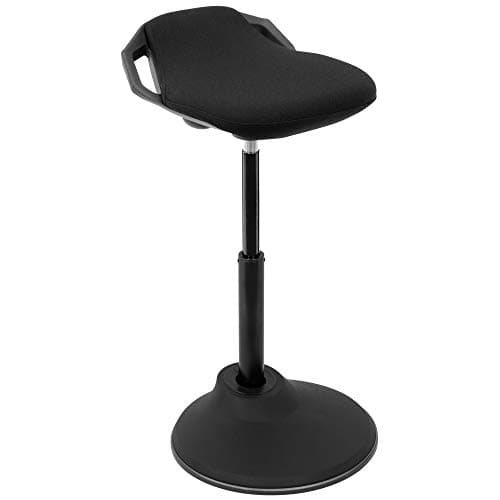 Mount-It! Ergonomic Sit-Stand Leaning Stool Best Overall | Tall desks and tall users | 7.2 | $199.99 - View on Amazon #ad disclosure · September 30, 2026 |
| 2 | 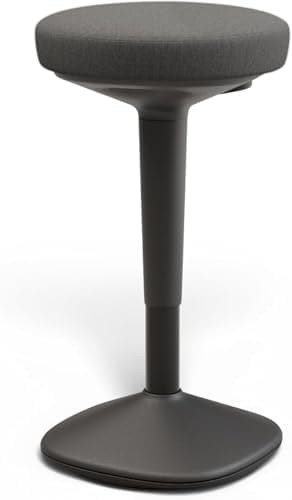 Desktronic Wobble Stool for Standing Desk Best Active Base | Movement while perching | 7.0 | $219.99 - View on Amazon #ad disclosure · September 30, 2026 |
| 3 | 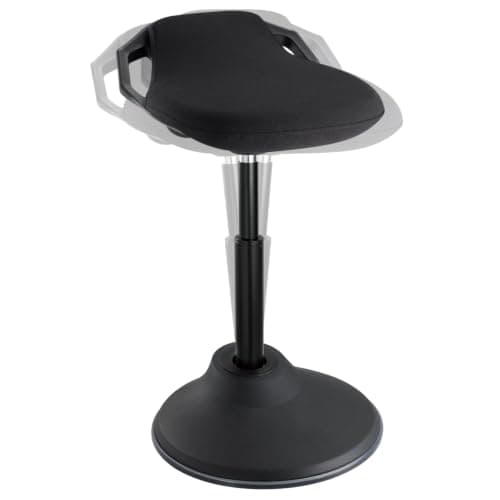 Desky Sit Stand Pro Active Stool Widest Adjustment Range | Sharing one stool | 6.6 | $199.90 - View on Amazon #ad disclosure · September 30, 2026 |
| 4 | 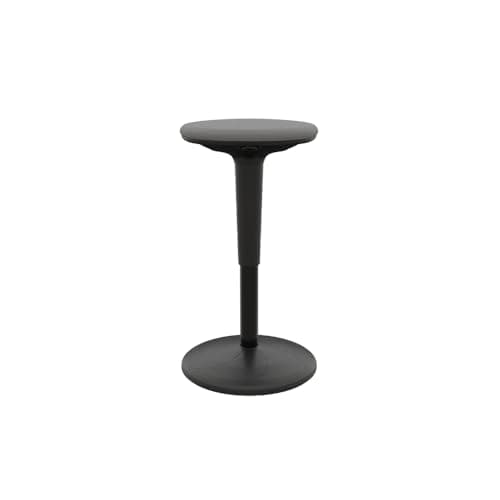 Vari Balance Stool Best for a Counter-Height Desk | Desks around 38 in | 6.4 | $199.00 - View on Amazon #ad disclosure · September 30, 2026 |
| 5 | 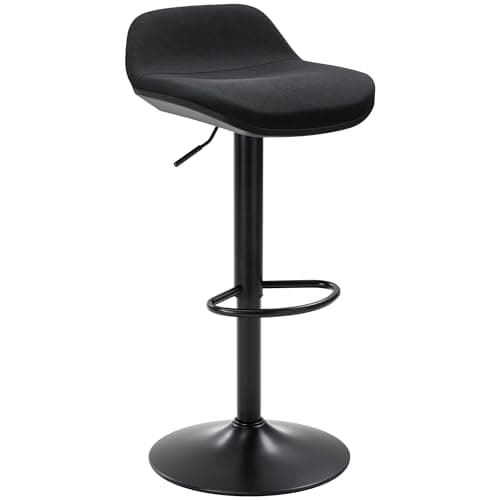 IWMH Standing Desk Stool with Backrest and Footrest Best With a Back and Footrest | Long perching sessions | 6.2 | $99.99 - View on Amazon #ad disclosure · September 30, 2026 |
| 6 | 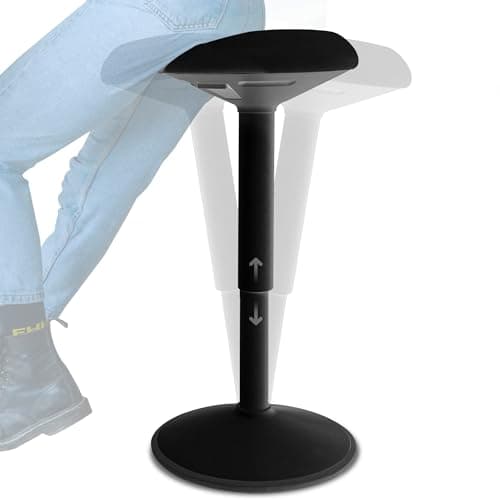 Backerz Standing Desk Stool Best Published Seat Build | A seat you know the spec of | 6.1 | $159.95 - View on Amazon #ad disclosure · September 30, 2026 |
| — | 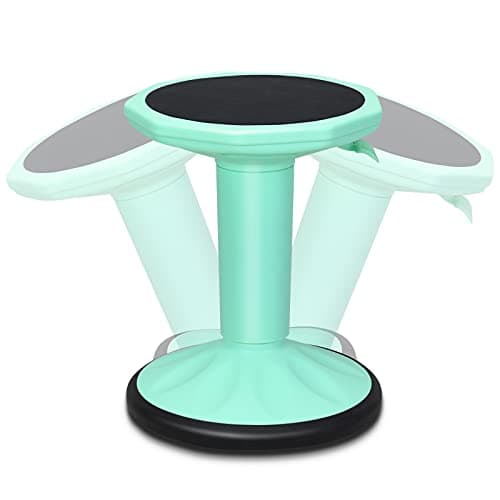 Giantex Wobble Stool Skip This | A dining table, not a desk | 2.2 | $69.99 - View on Amazon #ad disclosure · September 30, 2026 |
01 · Best Overall
Mount-It! Ergonomic Sit-Stand Leaning Stool
7.2/10 · scored on the published rubric
The only stool here whose published range reaches 34.6 in, which is what a 44 in desk actually needs - and the reason it is the pick for tall desks and tall users.
Why you might not: No backrest and no footrest, so it is a leaning seat and nothing else. If you want to sit back for an hour at a time, this is the wrong shape.
| Seat height | 24.8-34.6 in |
|---|---|
| Rated capacity | 248 lb |
Adjustments published (2): seat height (pneumatic, button under seat); 360-degree seat tilt.
Not published by the manufacturer: seat depth; seat width; warranty term. We have flagged these rather than guessed.
How this score was built
- Fit range10/10
- Adjustability7/10
- Capacity headroom7/10
- Materials & warranty7/10
- Spec coverage5/10
The overall is the mean of these, rounded to one decimal place. Each criterion is computed from a published figure - the rubric is here.
Price as of September 30, 2026. #ad how this is funded
02 · Best Active Base
Desktronic Wobble Stool for Standing Desk
7.0/10 · scored on the published rubric
Published in centimeters (57-82 cm) and converts to 22.4-32.3 in, which reaches a 42 in desk with room to spare. A 14.6 in base is narrow for a wobble stool, so it tucks in.
Why you might not: A narrow base is the trade-off for that tuck: less lateral stability than the wider ERGO COLLECT, and no backrest.
| Seat height | 22.4-32.3 in |
|---|---|
| Rated capacity | 265 lb |
Adjustments published (3): seat height (57-82 cm); 360-degree wobble; 360-degree swivel.
Not published by the manufacturer: seat depth; seat width; warranty term. We have flagged these rather than guessed.
How this score was built
- Fit range8/10
- Adjustability8/10
- Capacity headroom8/10
- Materials & warranty6/10
- Spec coverage5/10
The overall is the mean of these, rounded to one decimal place. Each criterion is computed from a published figure - the rubric is here.
Price as of September 30, 2026. #ad how this is funded
03 · Widest Adjustment Range
Desky Sit Stand Pro Active Stool
6.6/10 · scored on the published rubric
An 11 in span from 21.7 to 32.7 in is the largest published adjustment range on this page, and 275 lb of capacity comes with it.
Why you might not: Desky publishes neither seat dimensions nor a warranty term, so two of the six rubric criteria come back blank.
| Seat height | 21.7-32.7 in |
|---|---|
| Rated capacity | 275 lb |
Adjustments published (2): seat height (pneumatic lift); 360-degree swivel seat.
Not published by the manufacturer: seat depth; seat width; warranty term. We have flagged these rather than guessed.
How this score was built
- Fit range9/10
- Adjustability6/10
- Capacity headroom8/10
- Materials & warranty6/10
- Spec coverage4/10
The overall is the mean of these, rounded to one decimal place. Each criterion is computed from a published figure - the rubric is here.
Price as of September 30, 2026. #ad how this is funded
04 · Best for a Counter-Height Desk
Vari Balance Stool
6.4/10 · scored on the published rubric
A 15.5 in base and a 14.5 in seat make this the stool that actually tucks away, and 275 lb is the highest published capacity in the sub-$200 group.
Why you might not: It stops at 29 in. Run the arithmetic and that is a desk of about 38 in - fine at a counter, two inches short for a 6-footer's standing desk.
| Seat height | 22-29 in |
|---|---|
| Seat width | 14.5 in |
| Rated capacity | 275 lb |
Adjustments published (2): seat height (pneumatic lift); tilt on a rubber-grip base.
Not published by the manufacturer: seat depth; warranty term. We have flagged these rather than guessed.
How this score was built
- Fit range4/10
- Adjustability6/10
- Capacity headroom8/10
- Materials & warranty8/10
- Spec coverage6/10
The overall is the mean of these, rounded to one decimal place. Each criterion is computed from a published figure - the rubric is here.
Price as of September 30, 2026. #ad how this is funded
05 · Best With a Back and Footrest
IWMH Standing Desk Stool with Backrest and Footrest
6.2/10 · scored on the published rubric
The only stool in this group that publishes a range starting at 25.6 in and still climbing to 33.5 in, and one of very few with both a lumbar backrest and a footrest.
Why you might not: IWMH publishes no weight capacity at all. We cannot assess a figure the manufacturer will not state, so if you need capacity headroom, buy something that publishes it.
| Seat height | 25.6-33.5 in |
|---|---|
| Footrest | fixed |
Adjustments published (2): seat height (mechanism under seat, 65-85 cm); 360-degree swivel.
Not published by the manufacturer: rated capacity; seat depth; warranty term. We have flagged these rather than guessed.
How this score was built
- Fit range9/10
- Adjustability9/10
- Capacity headroom2/10
- Materials & warranty7/10
- Spec coverage4/10
The overall is the mean of these, rounded to one decimal place. Each criterion is computed from a published figure - the rubric is here.
Price as of September 30, 2026. #ad how this is funded
06 · Best Published Seat Build
Backerz Standing Desk Stool
6.1/10 · scored on the published rubric
A 10 in adjustment span - 21 to 31 in - is the widest here, so it covers a seated desk and a standing desk from the same stool. The 2.4 in HR60 foam pad is a published figure, which is rare in this category.
Why you might not: 220 lb is the lowest published capacity on the page. If you are near that number, the headroom is not there.
| Seat height | 21-31 in |
|---|---|
| Thickness | 2.4 in |
| Rated capacity | 220 lb |
Adjustments published (2): seat height (two buttons under seat); seat tilt.
Not published by the manufacturer: seat depth; seat width; warranty term. We have flagged these rather than guessed.
How this score was built
- Fit range6.5/10
- Adjustability6/10
- Capacity headroom4/10
- Materials & warranty8/10
- Spec coverage6/10
The overall is the mean of these, rounded to one decimal place. Each criterion is computed from a published figure - the rubric is here.
Price as of September 30, 2026. #ad how this is funded
Skip This
Giantex Wobble Stool
2.2/10 · scored on the published rubric
Cheap, light, and honest about what it is: the listing says it suits children over 7 and adults, in that order.
Why you might not: Skip this for a standing desk. A 24 in ceiling puts it at a 31-35 in work surface - a dining table, not a standing desk - and no capacity is published.
| Seat height | 16.5-24 in |
|---|
Adjustments published (2): seat height (16.5-24 in); rocking base.
Not published by the manufacturer: rated capacity; seat depth; seat width; warranty term. We have flagged these rather than guessed.
How this score was built
- Fit range1/10
- Adjustability4/10
- Capacity headroom1/10
- Materials & warranty3/10
- Spec coverage2/10
The overall is the mean of these, rounded to one decimal place. Each criterion is computed from a published figure - the rubric is here.
Price as of September 30, 2026. #ad how this is funded
How we ranked these
Five criteria, each scored relative to the best published figure in this field. The overall is their mean. The rubric in full is on our methodology page, including the list of things we cannot assess.
- Fit range - does the published seat-height range cover 30.6 to 34.5 in, and how much of it? This carries the most weight on this page because it is the page's whole question.
- Adjustability - countable published mechanisms. Height is table stakes; a backrest, a footrest, a lockable tilt each count.
- Capacity headroom - rated capacity against a 250 lb reference. No published figure scores low, because we will not assume one.
- Materials and build - what the maker actually states: cylinder class, cycle counts, foam type, base material, warranty term.
- Spec coverage - how many of the six rubric figures the manufacturer publishes at all. A listing that tells you nothing is not neutral; it is worse than one that tells you something you do not like.
The height problem, in one table
| Stool | Published ceiling | Reaches a 42 in desk? | Tallest desk it suits |
|---|---|---|---|
| Mount-It! Sit-Stand | 34.6 in | Yes, with margin | ~46 in |
| IWMH Standing Desk Stool | 33.5 in | Yes | ~45 in |
| Desky Sit Stand Pro | 32.7 in | Yes | ~44 in |
| Desktronic Wobble Stool | 32.3 in | Yes | ~43 in |
| Backerz Standing Desk Stool | 31 in | Just | ~42 in |
| Vari Balance Stool | 29 in | No | ~40 in |
| Giantex Wobble Stool | 24 in | No | ~35 in |
The "tallest desk it suits" column adds 11.4 inches to the ceiling - the top of the published elbow-rest range - because a taller person needs a bigger gap, not a smaller one. If you are short and your desk is tall, you need more seat height than average, not less.
Perching is not sitting, and it is not standing
The point of a perch stool is that it takes some of your weight while leaving your hips open and your feet loaded. You are not sitting - a conventional seated posture puts the trunk-to-thigh angle near 90 degrees - and you are not standing either. Somewhere around 120 to 135 degrees is the range these seats are shaped for.
Two consequences follow, and they are the things people get wrong on their first week with a stool.
Your feet still matter. OSHA's seated guidance is that the whole sole of the foot rests on the floor with the back of the knee slightly higher than the seat. Perching deliberately breaks the second half of that, but not the first: if your feet dangle at 32 inches, your entire weight lands on the front edge of the seat and the front of your thighs. That is the single most common reason a perch stool gets returned. The fix is either a footrest ring built into the stool - which is what makes a drafting chair a different product rather than a variant - or a separate footrest tall enough to matter.
A stool is half a setup, not a whole one. The reason to own one is to alternate: stand, perch, stand, perch. Which means the floor you stand on is part of the same decision, and an anti-fatigue mat does more for the standing half than any stool feature does for the perching half.
What actually separates these stools
The base is the trade-off nobody mentions
A wide base is stable and will not tuck under a desk. A narrow base tucks and is less stable. The Vari Balance publishes a 15.5-inch base, the Desktronic a 14.6-inch one; both are unusually narrow for the category, and both make a point of tucking away. If you share a room with the desk, that matters more than a spec sheet suggests. If you lean hard to one side to reach a second monitor, it matters in the other direction.
Weighted base or five casters
Every stool here uses a weighted, non-slip pedestal rather than a caster base. That is the right call for perching: a caster base rolls out from under you when you are only half-seated, which is precisely when you cannot catch yourself. The saddle stools on our saddle page mostly do use casters, which is one of the real differences between the two categories.
Backrests are rarer than you would expect
Only the IWMH in this field publishes a backrest, and it comes with a footrest too. That combination should be more common than it is: the two features solve the two genuine complaints about perching. It is the reason that stool ranks where it does despite IWMH publishing no weight capacity at all - a gap serious enough that we say so twice.
Foam is almost never specified
Backerz publishes 2.4 inches of HR60 molded foam and a 10,000-cycle durability test. Uncaged publishes 3 inches. Everyone else says "high-density foam", which is not a specification. We score that gap under spec coverage rather than pretending to know what is inside the seat.
What we looked at and left out
Exclusions are explainable or they are not exclusions. Each of these failed a published disqualifier, and the reason is the spec, not a preference.
| Product | Why it is not ranked |
|---|---|
| Yonsaeik Standing Stool | No published seat-height range. It has a 250 lb rating and a weighted base, but on a page about reaching desk height, a product that will not tell you its height cannot be ranked. |
| Global Industrial Interion Sit-Stand Stool | No published seat-height range. An 850 lb capacity is genuinely remarkable and completely unusable as a recommendation when we cannot say whether the seat reaches your desk. |
| TopJob Boba Active Wobble Stool | Published range of 19-25 in. Our arithmetic puts that at a 28-36 in work surface, so despite a 330 lb rating and a 50-degree tilt it is not a standing-desk stool. It is ranked on [our wobble stool page](/active-seating/wobble-stools) instead. |
How to buy one in three steps
- Measure your desk, and your elbow-rest height. Sit on a hard chair, elbows at a right angle, measure seat surface to underside of elbow. Desk height minus that figure is your target seat height. Full instructions.
- Read the published range, not the title. Check your target falls inside it with an inch of margin at each end. If there is no published range, buy something else - it is the one figure that decides whether the product works.
- Sort out your feet at the same time. Either the stool has a footrest ring or you buy a footrest. A perch stool with dangling feet is a worse seat than the chair you already own.
Questions people actually ask
Can I use a bar stool at a standing desk?
Is a standing-desk stool worth it if I have a good chair?
How long can you perch on a stool?
Do standing-desk stools need a footrest?
What is the difference between a perch stool and a wobble stool?
Read next
Sources
Every figure on this page traces to one of these. Product specifications come from the manufacturer's own listing; prices come from a live lookup and carry the date they were verified.