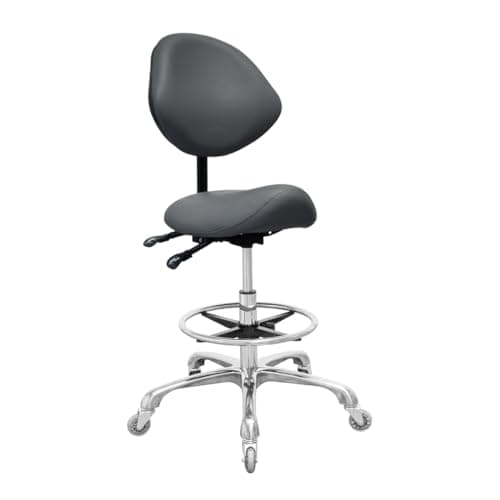
Geometry vs geometry
Saddle stool vs kneeling chair
Same mechanism, different loading: sit bones and feet against sit bones and shins.
Top pick: Nazalus Saddle Stool with Back and Footrest
$179.00 - View on Amazon
#ad disclosure · September 30, 2026
Before you choose a product you have to choose a shape. These five pages are the decision that comes first, with a table rather than an opinion.
Maintained by Sawyer V. · Last updated September 30, 2026
We earn a commission if you buy through the links on this page, at no extra cost to you. It does not affect the order of the picks - the rubric does that, and here is how we are funded. Prices were last verified September 30, 2026.

Most seating advice starts one step too late. It assumes you have decided you want a kneeling chair and asks which one. The harder question comes first: should you buy a kneeling chair at all, or a saddle stool, or a task chair with real lumbar adjustment?
These five pages answer that, and they are the most useful pages on this site if you are early in the decision. Each one leads with a decision table, then carries the best-specified example of each side - because a comparison that does not route you to a purchase is a dead end.
Every seat on this site works one of three ways, and the comparisons exist because the three are genuinely different trades rather than better and worse versions of the same thing.
Support. A conventional task chair accepts that sitting flattens your lumbar curve and puts material behind it. What it costs you: nothing postural, but it only works if the lumbar support is where your curve actually is - and on most chairs that is a fixed position set for an average torso.
Geometry. A kneeling chair or saddle stool opens your hip angle so the curve never flattens - no support needed. What it costs you: your postural muscles hold your torso up, and load goes somewhere unusual. Shins on a kneeling chair; inner thighs on a saddle.
Instability or height. A wobble stool removes stability so you keep shifting; a perch stool puts you high with weight through your feet. What it costs you: no backrest, usually no footrest, and at height a real problem about where your feet go.
Four questions that rule out most of the field in under a minute:
If those four leave you with more than one option, the comparison tables below split them on the specifics.
Two seats, not one. It is the conclusion that keeps recurring across these five pages, and it is not a hedge.
Published ergonomic guidance consistently favors varying posture over perfecting a single one, and no single seat achieves that alone. A well-specified task chair as the main seat plus a kneeling chair, saddle or perch stool for stretches gives you two genuinely different postures for less than the price of one premium chair.
What does not work is buying an active seat as a replacement, finding at hour four that nothing is supporting you, and concluding the category is a gimmick. It is a different tool being asked to do a job it was not built for.
Geometry vs geometry
Same mechanism, different loading: sit bones and feet against sit bones and shins.
Top pick: Nazalus Saddle Stool with Back and Footrest
#ad disclosure · September 30, 2026
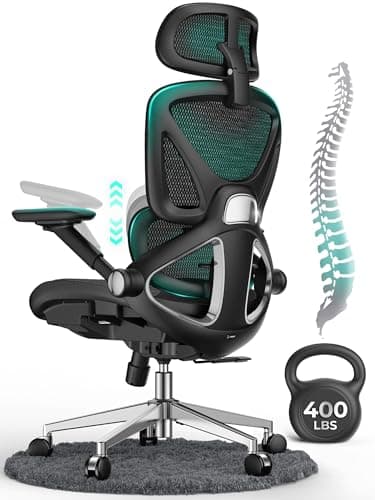
Postural vs supportive
One holds a shape and asks your muscles to keep it. The other supports the shape you end up in.
Top pick: CAPOT Ergonomic Mesh Chair
#ad disclosure · September 30, 2026
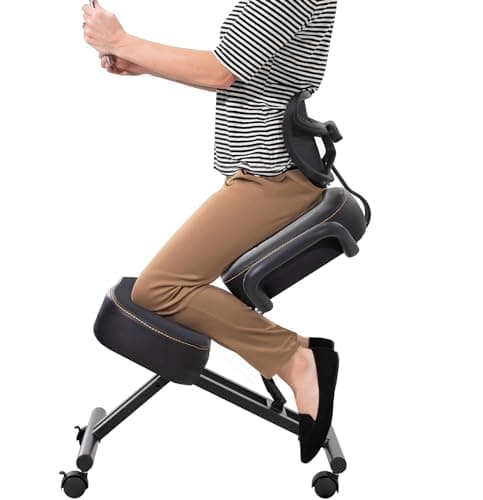
Posture vs instability
Only one has a specification you can check - and why we do not rank exercise balls.
Top pick: DRAGONN by VIVO Adjustable Kneeling Chair with Back Support
#ad disclosure · September 30, 2026
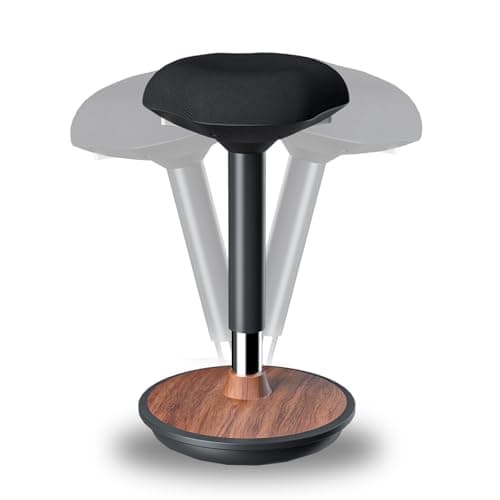
Three stool shapes
Geometry, instability, or neither - and which of the three reaches a standing desk.
Top pick: ERGO COLLECT Adult Wobble Stool
#ad disclosure · September 30, 2026
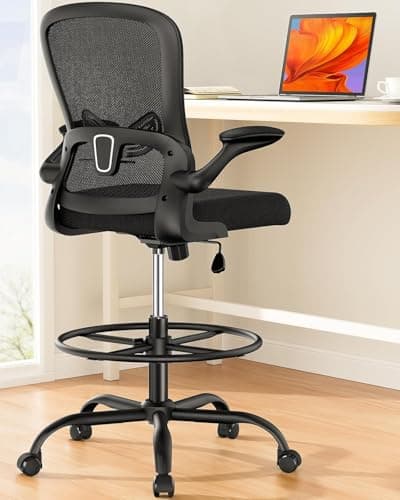
Both reach a tall desk
The real question is how long you sit at a time. The foot ring decides the rest.
Top pick: ErGear Drafting Chair with Foot Ring
#ad disclosure · September 30, 2026