Table
Seat height and depth by your height
5 ft 0 in to 6 ft 6 in, with maximum seat depth and standing-desk height alongside.
Every number on this site comes from one module, computed from a cited anthropometric table. These are the pages that show the arithmetic.
Maintained by Sawyer V. · Last updated September 30, 2026
We earn a commission if you buy through the links on this page, at no extra cost to you. It does not affect the order of the picks - the rubric does that, and here is how we are funded. Prices were last verified September 30, 2026.
Most seating advice is adjectives. "A good height for most people." "Comfortable support." "Suitable for tall users." None of that lets you check anything, which is exactly why it gets written that way.
These pages are arithmetic instead. Every fit figure on this site - in these guides, in every roundup's per-pick fit column, in every comparison table - is computed by one module from one cited source: the British adult percentile table published in Pheasant and Haslegrave's *Bodyspace*. Because it is one module, the site cannot contradict itself, and because the source is named you can go and check it.
[Seat height and seat depth by your height](/guides/seat-height-by-your-height) is the foundation. Two measurements decide whether a chair fits you, and neither is your height: your popliteal height (floor to the underside of your thigh, seated) and your buttock-popliteal length (which sets your maximum seat depth). The table converts from standing height; measuring your own beats it.
[What stool height does a standing desk need?](/guides/stool-height-for-a-standing-desk) is the one that saves money. Your desk height minus your sitting elbow-rest height, published as 7.5 to 11.4 inches. A 42-inch desk needs a seat around 31 to 34 inches - and published ceilings across the stools on this site run from 24 inches upward, all of them sold as standing-desk stools.
[Office chair weight capacity](/guides/office-chair-weight-capacity) explains why a 500 lb claim and a 500 lb chair are different things. The answer is which BIFMA standard was used: X5.1 tests around a 275 lb occupant, X5.11 covers 253 to 400 lb with most loads raised - and X5.11 is the only standard that specifies a minimum seat width.
If you do one thing from this whole section, do this. It takes a minute and it makes every product page on the internet more useful to you.
Deliberately, at the edge of what published figures can tell you. These pages describe mechanism - where load goes, what the published angles are, what adjusts. They do not make clinical claims, because there is no clinician on this site and nothing here is medically reviewed.
That boundary is most visible on the back-pain and sciatica material, where it would be easy and lucrative to blur it. We describe what a seat mechanically does and then stop. If you have persistent or worsening pain, numbness, tingling or weakness, a clinician is the right next step and no product on this site is a treatment.
Table
5 ft 0 in to 6 ft 6 in, with maximum seat depth and standing-desk height alongside.
Table
Desk height minus your sitting elbow height, for every desk from 36 to 48 in.

Table
What BIFMA X5.1 and X5.11 actually test, and how much headroom to leave.

How to
Set it higher than you think - two to four inches above your chair height.

How to
Four numbers, in the order that matters - and why one position is not the goal.
Evidence
Yes at the narrow thing they do. No at most of what the listings claim.

Evidence
At your curve, yes. Two inches above it, no. Position is the whole variable.

Evidence
Not by design. The pad goes under your shins, and the seat carries you.

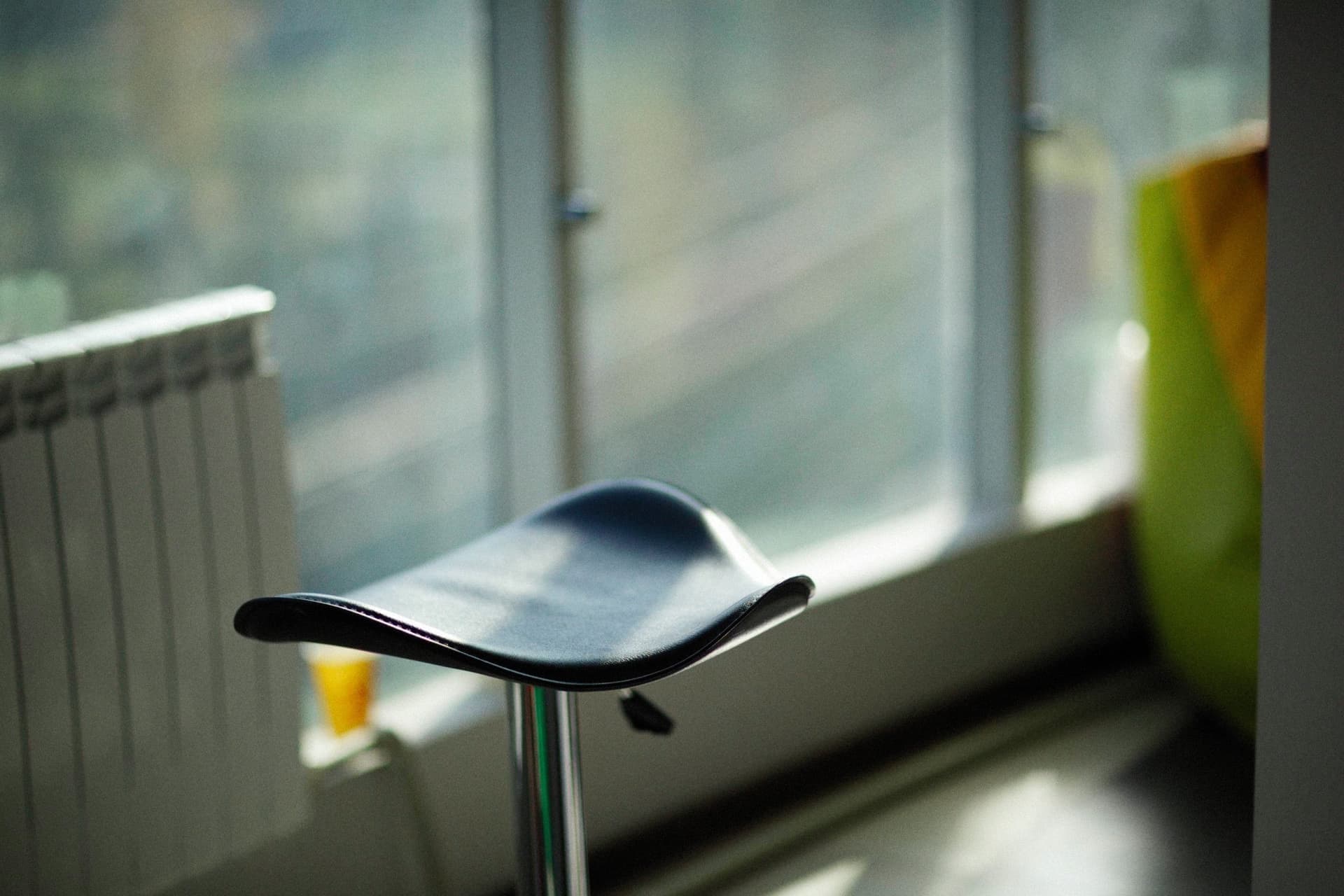
Definition
A tall, usually tilted seat that holds you half-standing with weight through your feet.

Definition
A task chair on a longer cylinder with a foot ring. That is the whole definition.

Definition
A stool whose base will not stay level - and the height ceiling that separates adult from classroom.