Are kneeling chairs worth it?
As a second seat for stretches of forward-leaning work, yes. As your only chair for an eight-hour day, no - and that is the question most buyers are actually asking.
By Sawyer V. · Published October 10, 2026
We earn a commission if you buy through the links on this page, at no extra cost to you. It does not affect the order of the picks - the rubric does that, and here is how we are funded. Prices were last verified October 11, 2026.
What we did and did not do
Units we claim to have tested: 0. Everyone in this category says they tested twenty chairs. We have not sat in any of these, and we say so.
What we did instead: compiled every figure each manufacturer publishes, computed the fit ranges from a cited anthropometric table, and linked the source for each number so you can check the arithmetic. Where a manufacturer does not publish a figure, we say that rather than filling the gap. The full method, including what we cannot assess, is here.
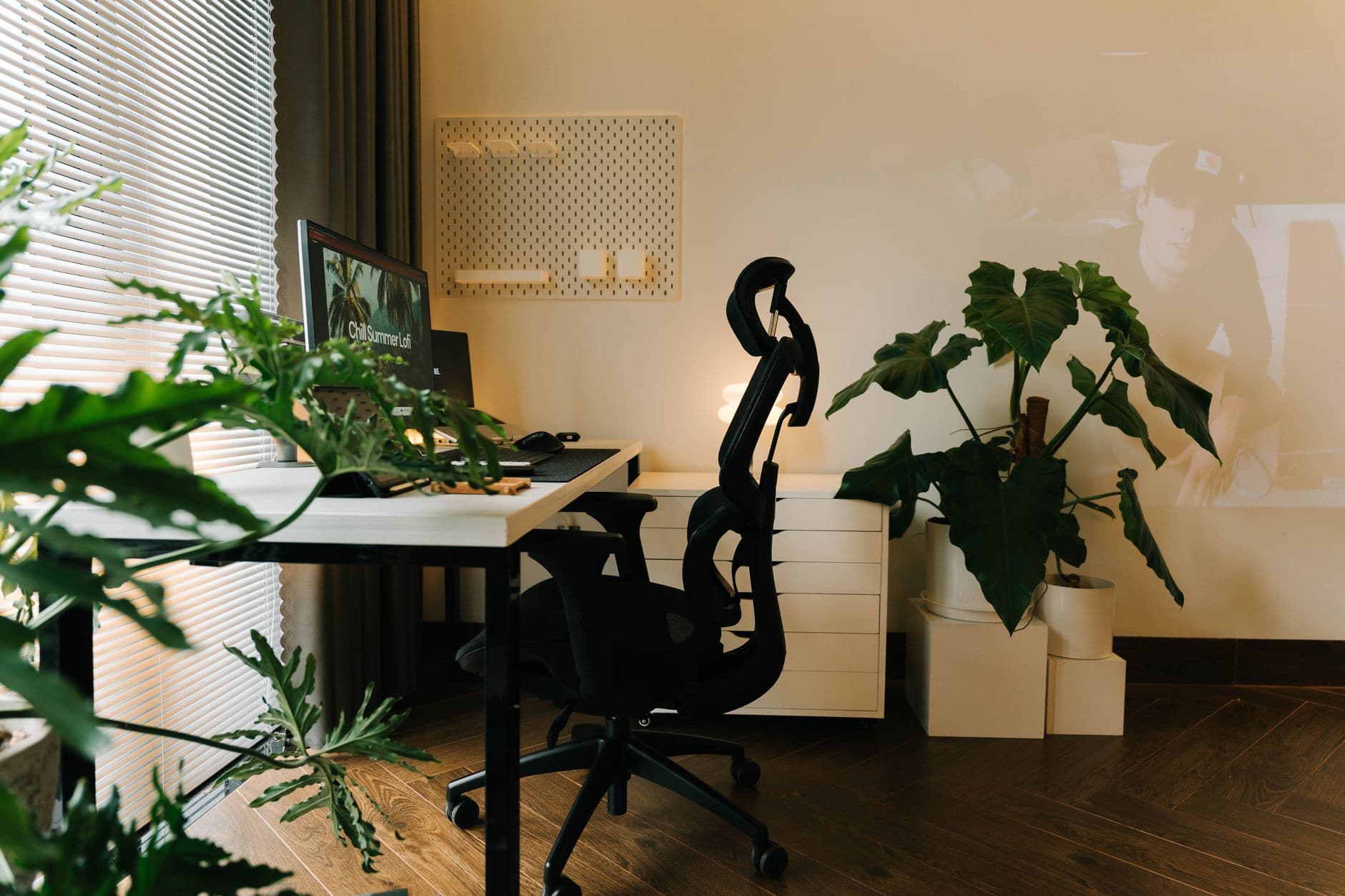
Yes, as a second seat. No, as your only one. That is the honest answer and the rest of this page is why. A kneeling chair is genuinely good at one thing - holding you in an open-hipped, forward-leaning posture without a mechanism pressing on your back - and genuinely bad at the thing most buyers want, which is replacing the chair they sit in all day.
If you buy one, buy a model with a backrest and a published height range. The DRAGONN with back support publishes 21 to 31 inches of seat height, which is 10 inches of travel and the widest in the category. Four of the seven kneeling chairs we verified publish no seat height at all, and on a seat whose whole function is an angle, that is the figure that decides whether the angle lands on your body.
And budget for two seats, not one. The pattern that actually works - a well-specified task chair as the main seat, a kneeling chair for stretches of focused forward-leaning work - costs less than one premium chair and gives you two genuinely different postures. OSHA's own workstation guidance is explicit that no single posture should be held indefinitely, and recommends alternating tasks and positions rather than perfecting one.
What the mechanism actually does
It changes one number: the angle between your trunk and your thighs. A conventional chair sets it near 90 degrees. A kneeling chair tips the seat forward and takes some weight on your shins, opening it to around 120 - MallVitally publishes exactly that figure, which is the clearest statement of the mechanism any maker in this field offers.
Opening that angle rotates your pelvis forward, and a forward-rotated pelvis holds a neutral lumbar curve without you thinking about it. That is a real mechanical effect, not a marketing claim - and it is the same mechanism a saddle stool uses by a different route.
What is NOT established is that this trains anything, corrects anything, or strengthens your core in a way you would measure. The listings in this category say all three. We are not repeating them. The mechanism is a change in loading while you are sitting in it; get out of the chair and you sit as you did before.
The four trade-offs, with the figures
| What you get | What it costs | The figure |
|---|---|---|
| An open hip angle with nothing pressing your back | No backrest on most models | 3 of 7 publish a backrest; your back muscles do the work on the rest |
| Weight shared between seat and shins | Shin and knee pressure | Seat height decides the split, and 4 of 7 publish no height at all |
| A genuinely different posture from your task chair | Getting in and out is deliberate | You place both shins; it is the slowest seat here to leave |
| Low price relative to a premium task chair | Thin spec sheets | Only 1 of 7 publishes a warranty term (5 years) |
| Works at a normal desk | Does not work at a standing desk | Makers publish 29-35 in desk windows; a 42 in desk is out of range |
| Capacity for most users | No high-capacity option exists | 265 lb is the ceiling across every kneeling chair we could verify |
The last row is the one that ends the conversation for some buyers. Five of the seven publish exactly 250 lb and the highest figure in the entire category is 265. On our 20-percent headroom rule that suits a user up to about 210 lb, and there is no heavier model to move up to. Saddle stools publish 350 lb and up; big and tall task chairs run 400 to 700.
The knee question, answered properly
It is the most common objection and it is mostly a setup problem. The pad belongs under your SHINS, not under your kneecaps, and the seat carries most of your weight - the shin pad takes the rest. If your knees hurt, the usual cause is that the seat is too low, which slides you down the slope and transfers load forward onto the joint.
That is also why the four models publishing no seat-height range are a problem rather than a quibble: the fix for knee pressure is a height adjustment, and you cannot check the range before you buy. The full knee answer, including who should not use one at all.
How long can you actually sit in one?
Nobody in this category publishes a figure, and we are not going to invent one. What the published guidance does say is directional and useful: OSHA's workstation eTool recommends changing posture rather than holding any single one indefinitely, and lists adjusting the chair, standing and walking periodically, and alternating tasks between sitting and standing.
Two of the listings in our wider set are notably honest about their own limits - one states its chair is "designed for posture correction rather than long-hour continuous sitting", and another recommends a break every hour. Those are the makers' own words about their own products, and they point the same way as the two-seat conclusion above.
Who should not buy one
- Anyone over about 210 lb, on our headroom rule against a 265 lb category ceiling. There is no step up.
- Anyone with existing knee, hip or coccyx problems - two listings in our set say this themselves, naming knee, calf and coccyx pressure and advising against use with a relevant medical history. Take that from them, not from us, and ask a clinician.
- Anyone with spinal stenosis. The mechanism deliberately increases lumbar lordosis - spinal extension - and OrthoInfo describes stenosis symptoms as easing in forward flexion and worsening when you straighten up. That is the wrong direction. Why, and what to buy instead.
- Anyone at a standing-height desk. The published desk windows are 29 to 35 in. A 42 in desk needs a standing-desk stool or a drafting chair.
- Anyone who needs one chair to do everything. This is the honest core of it: if your budget or your space allows exactly one seat, buy the well-specified task chair.
Mechanical, not medical
Everything above describes what a seat does mechanically - published angles, where load goes, what adjusts. It is not medical advice, there is no clinician on this site, and nothing here is medically reviewed.
Most people arrive at this question because of back pain. If yours is persistent, worsening, radiating into a limb, or accompanied by numbness, tingling or weakness, none of that is a chair problem and no product on this page addresses it. See a clinician. "Posture correcting" and "doctor recommended" on a product listing are marketing phrases, not credentials, and we will not repeat them for the sellers.
What we cannot tell you
Whether you will still be using it in six months. We have not sat in any of these chairs, and the honest truth about this category is that the failure mode is not breakage - it is the chair ending up in a spare room. Published specifications cannot predict that, and anyone claiming otherwise is guessing. Everything this method cannot assess, listed in full.
If you buy one, and what to pair it with
Ranked on the published rubric. Tap a row for the full write-up; the price button goes straight to Amazon. Every figure in the write-ups is the manufacturer's own published specification, linked at the source. We have not sat in any of these.
| # | Product | Best for | Score | Price |
|---|---|---|---|---|
| 1 | 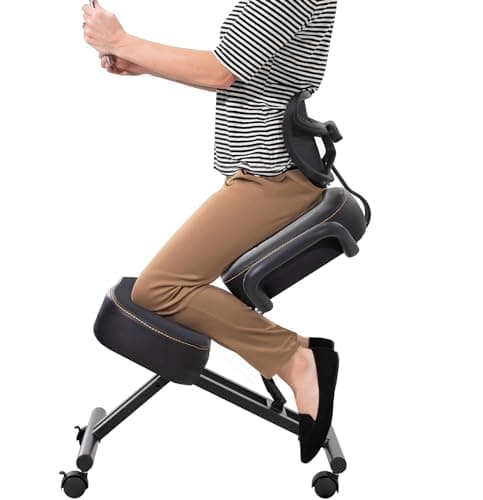 DRAGONN by VIVO Adjustable Kneeling Chair with Back Support Best If You Buy One | A backrest plus a 10 in range | 7.4 | $139.99 - View on Amazon #ad disclosure · October 11, 2026 |
| 2 | 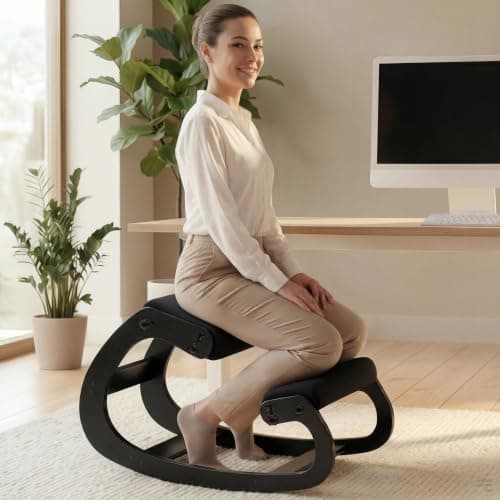 NYPOT Kneeling Chair with Adjustable Seats Longest Warranty | Buying once | 7.0 | $220.00 - View on Amazon #ad disclosure · October 11, 2026 |
| 3 | 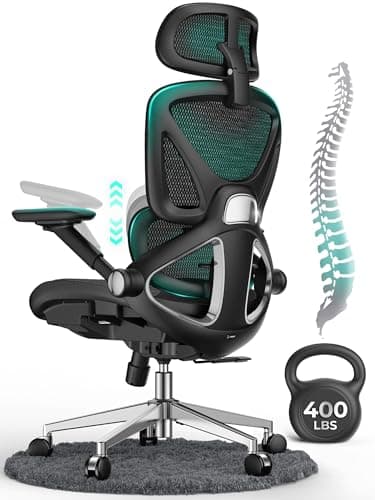 CAPOT Ergonomic Mesh Chair The Task Chair to Pair It With | The other eighty percent of your day | 9.8 | $199.99 - View on Amazon #ad disclosure · October 11, 2026 |
01 · Best If You Buy One
DRAGONN by VIVO Adjustable Kneeling Chair with Back Support
7.4/10 · scored on the published rubric
A 10 in span to 31 in and a backrest, which is the combination almost nothing else in this category publishes. It is the kneeling chair that can also work at a tall desk.
Why you might not: The backrest position is not specified anywhere in the published spec, so whether it lands on your lumbar curve is not something we can tell you in advance.
| Seat height | 21-31 in |
|---|---|
| Rated capacity | 250 lb |
Adjustments published (3): seat height (21-31 in); backrest; casters.
Not published by the manufacturer: seat depth; backrest adjustment range; warranty term. We have flagged these rather than guessed.
How this score was built
- Fit range9/10
- Adjustability8/10
- Capacity headroom7/10
- Materials & warranty7/10
- Spec coverage6/10
The overall is the mean of these, rounded to one decimal place. Each criterion is computed from a published figure - the rubric is here.
Price as of October 11, 2026. #ad how this is funded
02 · Longest Warranty
NYPOT Kneeling Chair with Adjustable Seats
7.0/10 · scored on the published rubric
A five-year warranty is the longest term on this site, and NYPOT states the desk-height window it suits (29-35 in) instead of leaving you to guess.
Why you might not: It publishes a desk range, not a seat-height range - a different measurement. If your desk is outside 29-35 in, there is no figure here that tells you whether it will work.
| Rated capacity | 250 lb |
|---|---|
| Warranty | 5 years |
| Cost per warranty year | $44.00 |
Adjustments published (2): independently adjustable seat and shin pads; wood-frame angle positions.
Not published by the manufacturer: seat-height range (only a compatible desk range, 29-35 in). We have flagged these rather than guessed.
How this score was built
- Fit range5/10
- Adjustability8/10
- Capacity headroom7/10
- Materials & warranty9/10
- Spec coverage6/10
The overall is the mean of these, rounded to one decimal place. Each criterion is computed from a published figure - the rubric is here.
Price as of October 11, 2026. #ad how this is funded
03 · The Task Chair to Pair It With
CAPOT Ergonomic Mesh Chair
9.8/10 · scored on the published rubric
The only chair on this site that answers all six rubric criteria from published figures: seat range, depth, width, 400 lb capacity, a five-year warranty and eight levels of 2 in lumbar travel. At $199.99 that is $40 per warranty year.
Why you might not: It tops out at 22.05 in. If you are over about 6 ft 2 in you will run out of seat height, whatever the listing's stated window says.
| Seat height | 18.5-22.05 in |
|---|---|
| Seat depth | 19.3 in |
| Seat width | 20 in |
| Rated capacity | 400 lb |
| Warranty | 5 years |
| Cost per warranty year | $40.00 |
| Maker's stated user height | 5 ft 5 in to 6 ft 2 in |
Adjustments published (5): seat height (18.5-22.05 in); lumbar depth (2 in over 8 levels); backrest lock at 90, 110 and 125 degrees; headrest height and depth; armrests flip up 90 degrees.
How this score was built
- Fit range9/10
- Adjustability10/10
- Capacity headroom10/10
- Materials & warranty10/10
- Spec coverage10/10
The overall is the mean of these, rounded to one decimal place. Each criterion is computed from a published figure - the rubric is here.
Price as of October 11, 2026. #ad how this is funded
Questions people actually ask
Are kneeling chairs worth it?
Are kneeling chairs good for you?
Do kneeling chairs actually work for back pain?
How long can you sit in a kneeling chair?
Do kneeling chairs hurt your knees?
What is the weight limit on a kneeling chair?
Kneeling chair or saddle stool?
Read next
Sources
Every figure on this page traces to one of these. Product specifications come from the manufacturer's own listing; prices come from a live lookup and carry the date they were verified.
- OSHA eTool, Computer Workstations - Good Working Positions
- OSHA eTool, Computer Workstations - Chairs
- Pheasant & Haslegrave, Bodyspace: Anthropometry, Ergonomics and the Design of Work - percentile table as tabulated by RoyMech
- ANSI/BIFMA X5.1, General Purpose Office Chairs - test summary (Micom Laboratories)