Mesh vs cushioned office chairs
Mesh spreads pressure and moves air. Foam conforms and insulates. Which suits you depends on your weight, your climate and how long you sit - not on which is better.
By Sawyer V. · Published September 30, 2026
We earn a commission if you buy through the links on this page, at no extra cost to you. It does not affect the order of the picks - the rubric does that, and here is how we are funded. Prices were last verified September 30, 2026.
What we did and did not do
Units we claim to have tested: 0. Everyone in this category says they tested twenty chairs. We have not sat in any of these, and we say so.
What we did instead: compiled every figure each manufacturer publishes, computed the fit ranges from a cited anthropometric table, and linked the source for each number so you can check the arithmetic. Where a manufacturer does not publish a figure, we say that rather than filling the gap. The full method, including what we cannot assess, is here.
There is no winner here and anyone who tells you otherwise is selling something. Mesh and foam do different mechanical things, and which one suits you depends on facts about you rather than facts about the material.
| Mesh | Foam / cushioned | |
|---|---|---|
| Pressure | Spreads load over a suspended surface; no single contact point | Conforms to your shape; load follows the compression |
| Heat and moisture | Air moves through it | Insulates; traps heat against you |
| Seat height effect | Minimal - the surface is thin | Adds its full thickness. A 6 in cushion raises you 6 in |
| Over time | Tensions can slacken; the frame edge can become the pressure point | Foam compresses and takes a set; the support you bought degrades |
| Seat edge | Frame-defined, often firm | Softer; a waterfall edge is easier to build in |
| Feel when you sit down | Firm, suspended, slightly springy | Immediate give, then settles |
Note the third row, because it is the one people do not anticipate. Foam thickness is added to your seat height. The Modway publishes a 6-inch cushion; that is 6 inches of seat height you did not ask for, and it can turn a correctly-set chair into one you need a footrest for. Mesh has no such effect.
Which one suits you
Choose mesh if
- You run hot, or your room does. This is the single most reliable predictor. Air moving through the seat is a real mechanical difference, not a marketing one.
- You sit for long unbroken stretches. Spread pressure beats conformed pressure over hours, because there is no point that is bearing more than the rest.
- Your seat height is already correct. Mesh does not change it.
- You are at the lighter end. Suspended mesh needs your weight to work with the tension; very light users sometimes find it unyieldingly firm.
Choose cushioned if
- You are at the heavier end. Foam over a sprung base distributes high load differently from a tensioned membrane. CHEJODAX publishes 50D foam over 2-inch pocket springs on a 500 lb chair, which is a build you do not see in mesh.
- You have a bony pressure point - a prominent tailbone, a previous injury. Foam conforms around it; mesh may not.
- Your room is cold, in which case insulation is a feature.
- Your chair is currently too low. A cushion raises you, which is occasionally exactly what you wanted.
The hybrid, which is most chairs now
Mesh back, padded seat. It is the commonest configuration sold and it is a sensible answer: the back is where heat builds against you and where a suspended surface conforms to your spine usefully; the seat is where a bit of give is welcome. SONGMICS publishes a 3.5-inch pad with a mesh back; ELABEST's T96 publishes a bionic-curve mesh back with a 17.7-inch padded pan.
The best-specified of each
Ranked on the published rubric. Tap a row for the full write-up; the price button goes straight to Amazon. Every figure in the write-ups is the manufacturer's own published specification, linked at the source. We have not sat in any of these.
| # | Product | Best for | Score | Price |
|---|---|---|---|---|
| 1 | 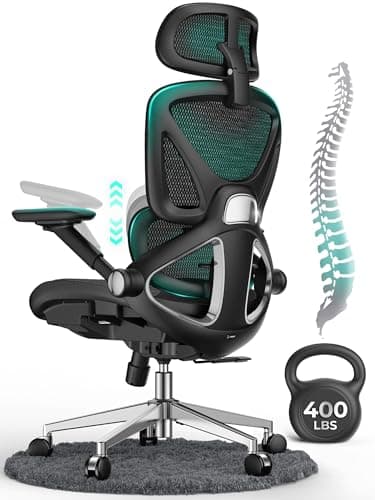 CAPOT Ergonomic Mesh Chair Best Mesh Overall | Mesh with real lumbar travel | 9.8 | $199.99 - View on Amazon #ad disclosure · September 30, 2026 |
| 2 | 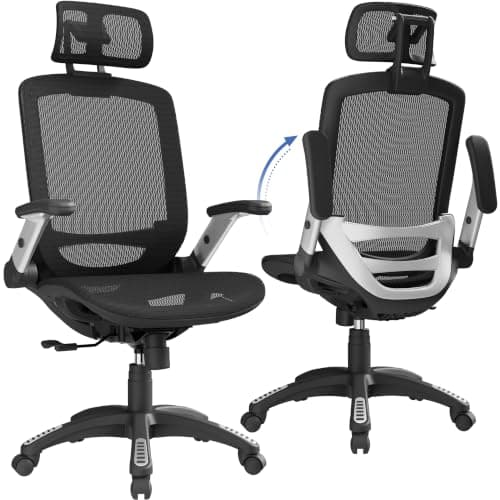 GABRYLLY Ergonomic Mesh Office Chair Best Full-Mesh Seat and Back | Heat, and long sits | 8.4 | $219.50 - View on Amazon #ad disclosure · September 30, 2026 |
| 3 | 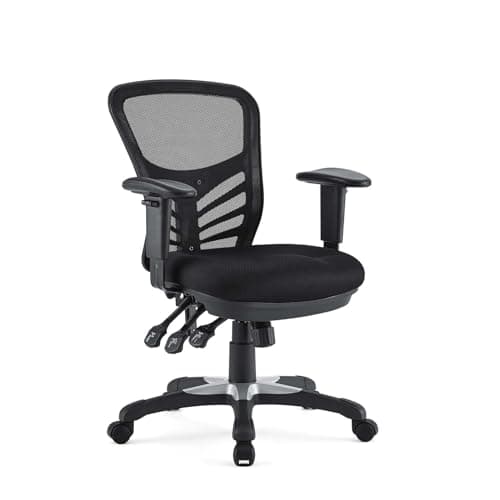 Modway Articulate Mesh Chair Best Cushioned Seat | A published 6 in cushion | 6.4 | $129.49 - View on Amazon #ad disclosure · September 30, 2026 |
| 4 | 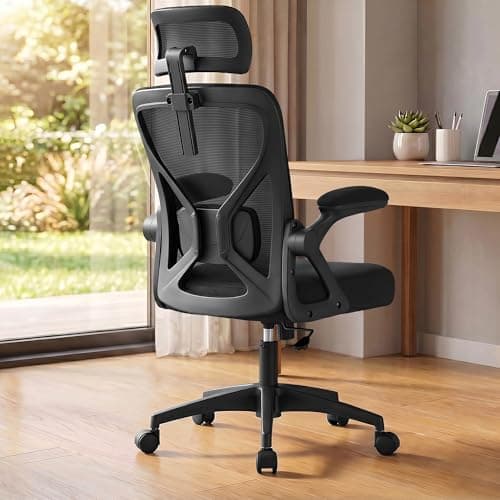 SONGMICS Ergonomic Mesh Chair Best Mesh Back, Padded Seat | A published 3.5 in pad | 7.2 | $63.99 - View on Amazon #ad disclosure · September 30, 2026 |
| 5 | 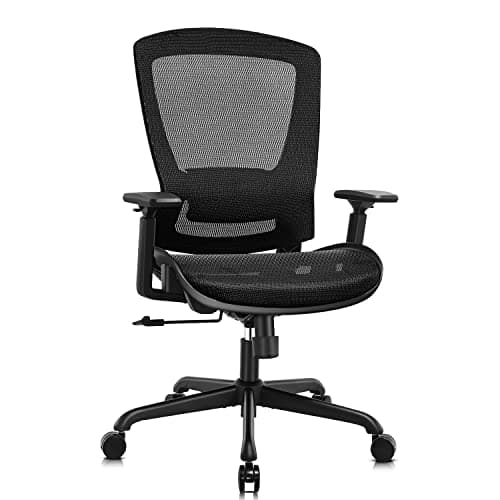 ELABEST T96 Ergonomic Mesh Chair Best Bionic-Curve Mesh Back | A tall back on a short pan | 6.0 | $239.99 - View on Amazon #ad disclosure · September 30, 2026 |
| 6 | 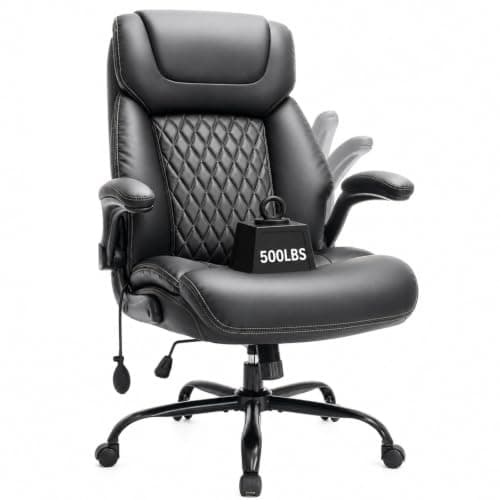 CHEJODAX Big and Tall Executive Chair, 500 lb Best Sprung Cushion | Pocket springs at high weight | 7.0 | $209.99 - View on Amazon #ad disclosure · September 30, 2026 |
01 · Best Mesh Overall
CAPOT Ergonomic Mesh Chair
9.8/10 · scored on the published rubric
The only chair on this site that answers all six rubric criteria from published figures: seat range, depth, width, 400 lb capacity, a five-year warranty and eight levels of 2 in lumbar travel. At $199.99 that is $40 per warranty year.
Why you might not: It tops out at 22.05 in. If you are over about 6 ft 2 in you will run out of seat height, whatever the listing's stated window says.
| Seat height | 18.5-22.05 in |
|---|---|
| Seat depth | 19.3 in |
| Seat width | 20 in |
| Rated capacity | 400 lb |
| Warranty | 5 years |
| Cost per warranty year | $40.00 |
| Maker's stated user height | 5 ft 5 in to 6 ft 2 in |
Adjustments published (5): seat height (18.5-22.05 in); lumbar depth (2 in over 8 levels); backrest lock at 90, 110 and 125 degrees; headrest height and depth; armrests flip up 90 degrees.
How this score was built
- Fit range9/10
- Adjustability10/10
- Capacity headroom10/10
- Materials & warranty10/10
- Spec coverage10/10
The overall is the mean of these, rounded to one decimal place. Each criterion is computed from a published figure - the rubric is here.
Price as of September 30, 2026. #ad how this is funded
02 · Best Full-Mesh Seat and Back
GABRYLLY Ergonomic Mesh Office Chair
8.4/10 · scored on the published rubric
Five of six rubric criteria answered with published figures: 18.9-23.6 in seat, 20.5 in wide, 20 in deep, 300 lb, three-year warranty. Its 23.6 in ceiling is the highest of any ordinary task chair here, which is what makes it the tall-user pick.
Why you might not: A 20 in seat depth is long. Our arithmetic says that is too deep for anyone under about 5 ft 8 in - the front edge will reach the back of your knees, which is the thing OSHA specifically tells you to avoid.
| Seat height | 18.9-23.6 in |
|---|---|
| Seat depth | 20 in |
| Seat width | 20.5 in |
| Rated capacity | 300 lb |
| Warranty | 3 years |
| Cost per warranty year | $73.17 |
| Maker's stated user height | 5 ft 2 in to 6 ft 1 in |
Adjustments published (4): seat height (18.9-23.6 in); flip-up armrests (45 degrees); recline 90-120 degrees; headrest.
Not published by the manufacturer: lumbar adjustment range. We have flagged these rather than guessed.
How this score was built
- Fit range9/10
- Adjustability8/10
- Capacity headroom8/10
- Materials & warranty8/10
- Spec coverage9/10
The overall is the mean of these, rounded to one decimal place. Each criterion is computed from a published figure - the rubric is here.
03 · Best Cushioned Seat
Modway Articulate Mesh Chair
6.4/10 · scored on the published rubric
A published 6 in seat cushion, which is the thickest on this site by some distance, and 331 lb behind it.
Why you might not: Passive lumbar support only - nothing to adjust - so if your lower back needs a specific depth of support this is not the chair.
| Seat height | 18-22 in |
|---|---|
| Thickness | 6 in |
| Rated capacity | 331 lb |
Adjustments published (4): seat height (18-22 in); height-adjustable armrests; tilt and lock; 360-degree swivel.
Not published by the manufacturer: seat depth; seat width; warranty term. We have flagged these rather than guessed.
How this score was built
- Fit range6/10
- Adjustability5/10
- Capacity headroom9/10
- Materials & warranty7/10
- Spec coverage5/10
The overall is the mean of these, rounded to one decimal place. Each criterion is computed from a published figure - the rubric is here.
Price as of September 30, 2026. #ad how this is funded
04 · Best Mesh Back, Padded Seat
SONGMICS Ergonomic Mesh Chair
7.2/10 · scored on the published rubric
331 lb and a published 3.5 in cushion at the lowest price of any chair on this site that publishes a seat-height range at all.
Why you might not: The recline stops at 105 degrees, which is barely a recline, and the seat depth is not published - the one figure a shorter user most needs.
| Seat height | 17.7-21.7 in |
|---|---|
| Seat width | 19.7 in |
| Thickness | 3.5 in |
| Rated capacity | 331 lb |
Adjustments published (4): seat height (17.7-21.7 in); flip-up armrests; tilt 90-105 degrees; lumbar support.
Not published by the manufacturer: seat depth; warranty term. We have flagged these rather than guessed.
How this score was built
- Fit range7/10
- Adjustability6/10
- Capacity headroom9/10
- Materials & warranty7/10
- Spec coverage7/10
The overall is the mean of these, rounded to one decimal place. Each criterion is computed from a published figure - the rubric is here.
05 · Best Bionic-Curve Mesh Back
ELABEST T96 Ergonomic Mesh Chair
6.0/10 · scored on the published rubric
A 23.6 in ceiling paired with a short 17.7 in seat depth - an unusual combination, and the reason it suits a tall user with a shorter lower leg.
Why you might not: No published capacity and no warranty term at $239.99, which is a lot of money for two blank rubric rows.
| Seat height | 19.6-23.6 in |
|---|---|
| Seat depth | 17.7 in |
| Seat width | 20 in |
Adjustments published (4): seat height (19.6-23.6 in); 3D armrests (height, width, angle); adjustable lumbar; synchro-tilt.
Not published by the manufacturer: rated capacity; warranty term. We have flagged these rather than guessed.
How this score was built
- Fit range8/10
- Adjustability8/10
- Capacity headroom2/10
- Materials & warranty6/10
- Spec coverage6/10
The overall is the mean of these, rounded to one decimal place. Each criterion is computed from a published figure - the rubric is here.
Price as of September 30, 2026. #ad how this is funded
06 · Best Sprung Cushion
CHEJODAX Big and Tall Executive Chair, 500 lb
7.0/10 · scored on the published rubric
States the user-height window it is built for - 5 ft 7 in to 6 ft 4 in - and publishes the seat build: 50D foam over 2 in pocket springs, 4.7-5.9 in of padding, on a steel base tested to 500 lb.
Why you might not: No seat width published, which on a 500 lb chair is the dimension that most decides whether you fit in it.
| Thickness | 5.9 in |
|---|---|
| Rated capacity | 500 lb |
| Maker's stated user height | 5 ft 7 in to 6 ft 4 in |
Adjustments published (3): seat height; inflatable lumbar support; backrest recline.
Not published by the manufacturer: seat-height range; seat width; seat depth; warranty term. We have flagged these rather than guessed.
How this score was built
- Fit range6/10
- Adjustability7/10
- Capacity headroom9/10
- Materials & warranty8/10
- Spec coverage5/10
The overall is the mean of these, rounded to one decimal place. Each criterion is computed from a published figure - the rubric is here.
Price as of September 30, 2026. #ad how this is funded
How we ranked these
This is not a mesh-versus-foam league table - they are not competing on one axis. We ranked on how well each chair is specified for what it is, using the same five criteria as the rest of the site, and labeled the awards so you can find the best example of each type.
- Fit range - published seat-height range and depth. Where a cushion thickness is published, it is counted as part of the seat height, because it is.
- Adjustability - published mechanisms, with lumbar travel and recline range weighted up.
- Capacity headroom - against a 275 lb reference.
- Materials and build - here the material specifics count directly: published foam thickness or density, mesh type, frame, certification, warranty.
- Spec coverage - how much of the rubric is answered.
What neither material fixes
Seat depth. Lumbar position. Seat height. Armrest range. Every one of those matters more to how a chair fits you than the material does, and none of them is affected by it.
This is the useful thing to take away from the mesh-versus-foam question: it is a second-order decision. Get the seat height and depth right, get the lumbar support where your curve is, and then choose the material you would rather sit on. Doing it the other way round is how people end up with a beautifully breathable chair that does not fit them.
How each one fails
Worth knowing, and rarely discussed, because it determines what a chair is like in year three rather than week one.
Mesh slackens. As tension drops the membrane sags and the frame edge - which was never a pressure point - starts to become one. This is a slow change and hard to notice happening.
Foam takes a set. It compresses where you sit and stops rebounding, so the support you bought degrades in the specific place you need it. Foam density predicts this, which is why it matters - and why almost nobody publishing "high-density foam" as a specification is telling you anything. Two makers on this site publish an actual figure.
We cannot assess either failure mode. It takes months to years and we have owned none of these chairs for any length of time - we have not sat in them at all. What we can do is tell you which manufacturers published a density or a warranty term, and note that a five-year warranty is a manufacturer betting its own money on the answer. Our full list of what we cannot assess is here.
Questions people actually ask
Is mesh or cushioned better for an office chair?
Is a mesh seat uncomfortable?
Does mesh sag over time?
Is mesh or cushioned better for back pain?
Does a thick cushion make a chair better?
Read next
Sources
Every figure on this page traces to one of these. Product specifications come from the manufacturer's own listing; prices come from a live lookup and carry the date they were verified.