Ergonomic sitting posture at a desk
There is a correct position, it is described in published guidance, and it takes four measurements to set. There is also no single position you should hold all day.
By Sawyer V. · Published September 30, 2026
We earn a commission if you buy through the links on this page, at no extra cost to you. It does not affect the order of the picks - the rubric does that, and here is how we are funded. Prices were last verified September 30, 2026.
What we did and did not do
Units we claim to have tested: 0. Everyone in this category says they tested twenty chairs. We have not sat in any of these, and we say so.
What we did instead: compiled every figure each manufacturer publishes, computed the fit ranges from a cited anthropometric table, and linked the source for each number so you can check the arithmetic. Where a manufacturer does not publish a figure, we say that rather than filling the gap. The full method, including what we cannot assess, is here.
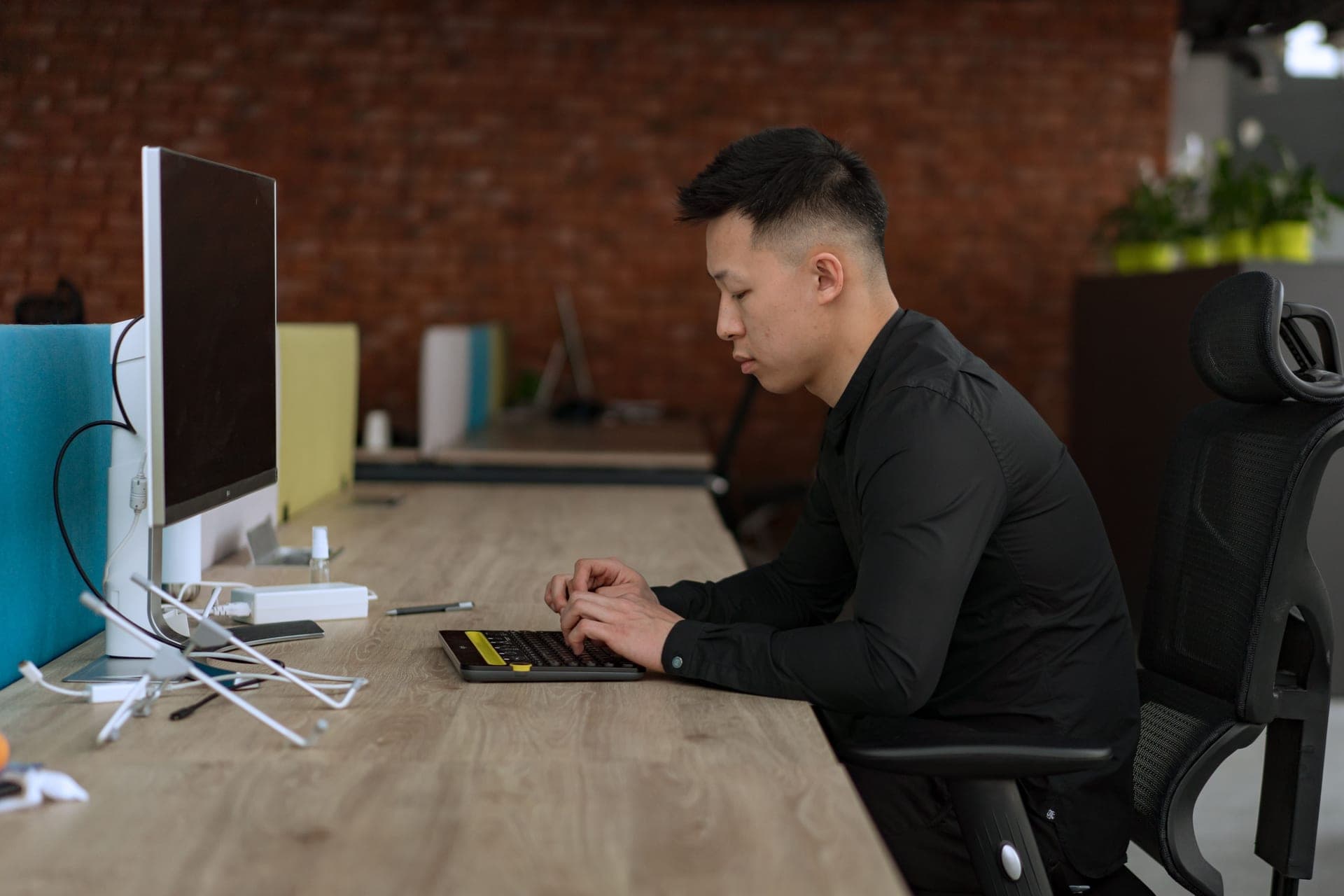
Most posture advice is a picture. This is four numbers. A picture cannot tell you whether your chair is two inches too high; a measurement can.
The published guidance is not complicated. OSHA's chair criteria are that the chair height is right when the entire sole of the foot can rest on the floor with the back of the knee slightly higher than the seat, and that the seat pan should support most of the thigh without contact between the back of the knee and the front edge of the seat pan. Add a height-adjustable lumbar support and a backrest that reclines at least 15 degrees from vertical, and that is the specification.
The four numbers
- Seat height = your popliteal height, plus shoes. Floor to the underside of your thigh just behind the knee, measured seated with feet flat. About a quarter of your standing height. If your chair cannot get there, a footrest fixes it from the other end.
- Seat depth <= your buttock-popliteal length minus 2 inches. Back of buttock to back of knee, minus clearance. Two to three fingers should fit between the seat's front edge and your calf.
- Lumbar support at the inward hollow above your pelvis. Roughly belt height, which is lower than most people place it and lower than most chairs default to.
- Forearms level with the work surface, elbows near a right angle. This one sets the desk, not the chair. If the desk is fixed and wrong, the chair cannot fix it and the footrest is how you resolve the conflict.
Your numbers, computed
| Your height | Seat height | Max seat depth | Standing-desk height |
|---|---|---|---|
| 5'0" | 15-16.6 in | 15.6 in | 37.8 in |
| 5'2" | 15.7-17.3 in | 16.7 in | 39.1 in |
| 5'4" | 16.3-17.9 in | 16.7 in | 40.2 in |
| 5'6" | 17-18.6 in | 17.7 in | 41.4 in |
| 5'8" | 17.9-19.5 in | 19.9 in | 42.8 in |
| 5'10" | 18.4-20 in | 18.8 in | 44.2 in |
| 6'0" | 19.1-20.7 in | 19.8 in | 45.6 in |
| 6'2" | 19.5-21.1 in | 20.4 in | 46.5 in |
| 6'4" | 19.5-21.1 in | 20.4 in | 46.5 in |
| 6'6" | 19.5-21.1 in | 20.4 in | 46.5 in |
The order matters
Set them in this sequence, because each one constrains the next:
- Chair height for your elbows, not your feet. Forearms level with the desk. This is the non-negotiable one because it sets your shoulders and wrists.
- Then your feet. If they do not reach the floor, put something under them. Do not lower the chair - that trades a leg problem for a shoulder problem.
- Then seat depth. If the seat is too deep, you will sit forward and lose the backrest. There is usually no adjustment, which is why it is a purchase decision rather than a setup one.
- Then lumbar position. Last, because it only works once you are actually sitting back against it.
The mistake almost everyone makes
Setting the chair height for your feet. It feels like the obvious starting point, and it puts your elbows in the wrong place for the rest of the day - because a standard 29-inch desk is set for a 5 ft 10 in user and your feet have no say in that.
Set the chair for the desk. Then solve your feet separately. That is the whole trick, and it is why a footrest is the highest-leverage cheap purchase in this whole category.
Why one position is not the goal
Here is the part that most posture guides underplay. Having established a correct position, the aim is not to hold it for eight hours.
Any sustained static posture loads the same tissues continuously, and published ergonomic guidance consistently emphasizes varying position rather than perfecting one. A well-set-up chair is not a position to hold; it is a good default to return to.
Which is the honest argument for most of the products on this site:
- A recline range is a second position without leaving the chair. The best-specified chairs here lock at 90, 110 and 125 degrees.
- A [perch stool](/active-seating/standing-desk-stools) at a height-adjustable desk is a third - hips open, weight partly through your feet.
- A [kneeling chair](/active-seating/kneeling-chairs) or [saddle stool](/active-seating/saddle-stools) is a fourth, with the hip angle opened to around 120 to 135 degrees.
- Standing is free, and an anti-fatigue mat makes more of it tolerable.
None of those replaces getting the default right. All of them are worth more than a marginally better default.
What posture does not fix
Sitting position is a mechanical variable, and a modest one. It is not a treatment for anything, and the amount of confident health advice attached to seated posture far exceeds what can be supported.
This page describes mechanics. It is not medical advice, there is no clinician on this site, and nothing here is reviewed by one. Persistent or worsening pain, numbness, tingling or weakness is a reason to see a clinician rather than to re-read a posture guide.
What it takes to set this up
Ranked on the published rubric. Tap a row for the full write-up; the price button goes straight to Amazon. Every figure in the write-ups is the manufacturer's own published specification, linked at the source. We have not sat in any of these.
| # | Product | Best for | Score | Price |
|---|---|---|---|---|
| 1 | 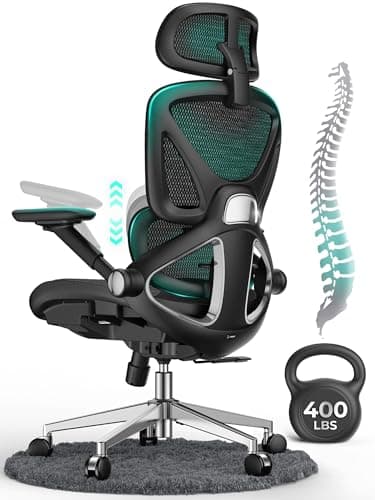 CAPOT Ergonomic Mesh Chair Best Chair for Getting All Four Right | All six criteria published | 9.8 | $199.99 - View on Amazon #ad disclosure · September 30, 2026 |
| 2 | 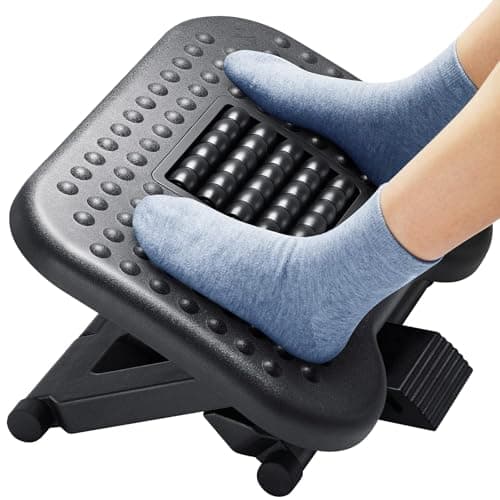 HUANUO Adjustable Footrest Best Footrest | Solving feet without lowering the chair | 8.2 | $35.99 - View on Amazon #ad disclosure · September 30, 2026 |
| 3 | 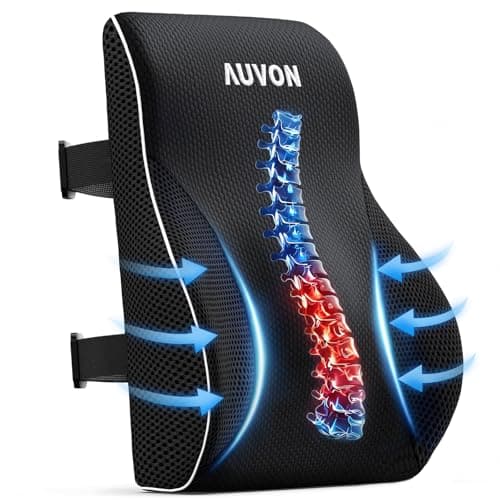 AUVON Lumbar Pillow with Bulge Best Lumbar Cushion | Fixing a bump in the wrong place | 8.2 | $19.99 - View on Amazon #ad disclosure · September 30, 2026 |
| 4 | 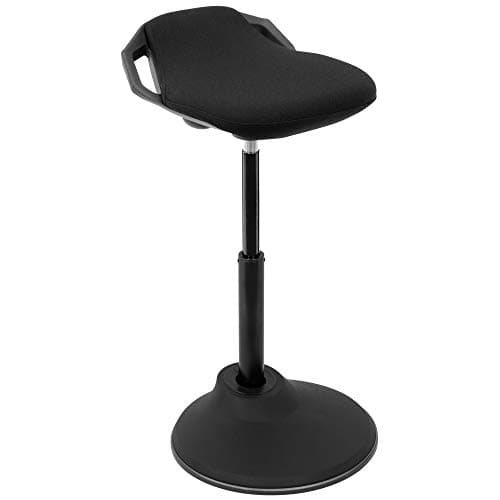 Mount-It! Ergonomic Sit-Stand Leaning Stool Best Second Position | Perching at a standing desk | 7.2 | $199.99 - View on Amazon #ad disclosure · September 30, 2026 |
01 · Best Chair for Getting All Four Right
CAPOT Ergonomic Mesh Chair
9.8/10 · scored on the published rubric
The only chair on this site that answers all six rubric criteria from published figures: seat range, depth, width, 400 lb capacity, a five-year warranty and eight levels of 2 in lumbar travel. At $199.99 that is $40 per warranty year.
Why you might not: It tops out at 22.05 in. If you are over about 6 ft 2 in you will run out of seat height, whatever the listing's stated window says.
| Seat height | 18.5-22.05 in |
|---|---|
| Seat depth | 19.3 in |
| Seat width | 20 in |
| Rated capacity | 400 lb |
| Warranty | 5 years |
| Cost per warranty year | $40.00 |
| Maker's stated user height | 5 ft 5 in to 6 ft 2 in |
Adjustments published (5): seat height (18.5-22.05 in); lumbar depth (2 in over 8 levels); backrest lock at 90, 110 and 125 degrees; headrest height and depth; armrests flip up 90 degrees.
How this score was built
- Fit range9/10
- Adjustability10/10
- Capacity headroom10/10
- Materials & warranty10/10
- Spec coverage10/10
The overall is the mean of these, rounded to one decimal place. Each criterion is computed from a published figure - the rubric is here.
Price as of September 30, 2026. #ad how this is funded
02 · Best Footrest
HUANUO Adjustable Footrest
8.2/10 · scored on the published rubric
Three published heights and a 30 degree tilt range - the most adjustment of any footrest here, and the reason it is the pick for a chair you cannot lower far enough.
Why you might not: The three heights are fixed positions, not a continuous range, so if your gap is 4.6 in you are choosing between too low and too high.
| Platform height | 3.9-6.5 in |
|---|---|
| Footprint | 17.3 x 13.1 in |
Adjustments published (2): three platform heights: 3.9, 5.3 and 6.5 in; tilt 0-30 degrees.
Not published by the manufacturer: rated capacity; warranty term. We have flagged these rather than guessed.
How this score was built
- Fit range9/10
- Adjustability10/10
- Size & footprint8/10
- Materials & warranty7/10
- Spec coverage7/10
The overall is the mean of these, rounded to one decimal place. Each criterion is computed from a published figure - the rubric is here.
Price as of September 30, 2026. #ad how this is funded
03 · Best Lumbar Cushion
AUVON Lumbar Pillow with Bulge
8.2/10 · scored on the published rubric
The only lumbar cushion here that publishes its thickest point - 4.5 in - and the user-weight band it was designed for, 100 to 200 lb. That is the figure to compare against your chair's own lumbar depth.
Why you might not: That 100-200 lb window is narrow and published for a reason: above it, the foam compresses further than intended.
| Thickness | 4.5 in |
|---|---|
| Footprint | 18 x 15 in |
| Rated capacity | 200 lb |
Adjustments published (1): adjustable straps.
Not published by the manufacturer: foam density; warranty term. We have flagged these rather than guessed.
How this score was built
- Fit range10/10
- Adjustability7/10
- Size & footprint8/10
- Materials & warranty7/10
- Spec coverage9/10
The overall is the mean of these, rounded to one decimal place. Each criterion is computed from a published figure - the rubric is here.
04 · Best Second Position
Mount-It! Ergonomic Sit-Stand Leaning Stool
7.2/10 · scored on the published rubric
The only stool here whose published range reaches 34.6 in, which is what a 44 in desk actually needs - and the reason it is the pick for tall desks and tall users.
Why you might not: No backrest and no footrest, so it is a leaning seat and nothing else. If you want to sit back for an hour at a time, this is the wrong shape.
| Seat height | 24.8-34.6 in |
|---|---|
| Rated capacity | 248 lb |
Adjustments published (2): seat height (pneumatic, button under seat); 360-degree seat tilt.
Not published by the manufacturer: seat depth; seat width; warranty term. We have flagged these rather than guessed.
How this score was built
- Fit range10/10
- Adjustability7/10
- Capacity headroom7/10
- Materials & warranty7/10
- Spec coverage5/10
The overall is the mean of these, rounded to one decimal place. Each criterion is computed from a published figure - the rubric is here.
Price as of September 30, 2026. #ad how this is funded
Questions people actually ask
What is the correct sitting posture at a desk?
Should I set my chair height by my feet or my desk?
What is the best sitting position for your back?
How often should I change position?
Is it bad to cross your legs at a desk?
Read next
Sources
Every figure on this page traces to one of these. Product specifications come from the manufacturer's own listing; prices come from a live lookup and carry the date they were verified.