How to read an office chair spec sheet
We read 38 chair listings figure by figure. Ten publish a seat depth. Four publish how far the lumbar support moves. Here is what to look for and what the silence means.
By Sawyer V. · Published October 6, 2026
We earn a commission if you buy through the links on this page, at no extra cost to you. It does not affect the order of the picks - the rubric does that, and here is how we are funded. Prices were last verified October 6, 2026.
What we did and did not do
Units we claim to have tested: 0. Everyone in this category says they tested twenty chairs. We have not sat in any of these, and we say so.
What we did instead: compiled every figure each manufacturer publishes, computed the fit ranges from a cited anthropometric table, and linked the source for each number so you can check the arithmetic. Where a manufacturer does not publish a figure, we say that rather than filling the gap. The full method, including what we cannot assess, is here.
Nine figures decide whether an office chair fits you. Most listings publish three of them. The three they publish are the ones that sound reassuring - overall dimensions, a weight capacity, a color. The ones they leave out are the ones you cannot adjust your way around afterwards.
This page is the reference we needed while building the rest of this site. We read 38 task and drafting chair listings one at a time and recorded, per chair, which figures the manufacturer actually publishes. The counts below are that tally - not an estimate, not an impression of the market. Where a figure is missing from a listing, that absence is itself information, and the second half of this page is about how to read it.
The nine figures, and how often they appear
| Figure | What it decides | Published by | Typical range in this field |
|---|---|---|---|
| Rated capacity | Whether the chair is built for your weight, with headroom | 28 of 38 | 220-700 lb |
| Seat-height range | Whether your forearms can reach desk level with your feet flat | 15 of 38 | 16.7-21.7 in on task chairs; 21.5-31.9 in on drafting chairs |
| Seat width | Hip clearance, and whether you can shift position | 13 of 38 | 16.5-27 in |
| Seat depth | Whether the front edge clears the back of your knee | 10 of 38 | 15.75-22 in |
| Recline range in degrees | Whether you get a second posture at all | 9 of 38 | 90-105 at the low end to 90-135 at the high end |
| Warranty term | The only input to cost per warranty year | 8 of 38 | 1-7 years |
| Maker's user-height window | Who the maker says it was built for | 5 of 38 | 61-76 in of stature |
| Lumbar adjustment travel | Whether the support can reach YOUR curve | 4 of 38 | 2 in, or 8 discrete levels |
| Foot-ring travel | On a tall chair, whether your feet land correctly | 1 of 38 | 5 in |
The shape of that table is the point. Capacity is published by three chairs in four. Lumbar travel is published by one in ten. Capacity is cheap to print and flattering; lumbar travel is a figure that invites comparison and usually loses. The market is not hiding information at random - it publishes the figures that read well and omits the figures that let you check a claim.
Figure by figure: what it means and what to do with it
Seat-height range
Floor to the top of the seat, as a low-to-high pair. This is the single most important figure on the sheet and it is published by fewer than half the chairs we checked.
Your target is your popliteal height - floor to the underside of your thigh just behind the knee, measured sitting with your feet flat - plus about an inch for shoes. Roughly a quarter of your standing height gets you close. OSHA's criterion is that the height is right "when the entire sole of the foot can rest on the floor with the back of the knee slightly higher than the seat of the chair". Our table computes the band from your height.
What to check: that your band falls inside the published range with an inch of margin at each end. Permanently at full extension means no adjustment left; permanently at the floor usually means the chair is too tall for you and no amount of padding fixes it.
Seat depth
Front-to-back on the seat pan. Published by 10 of 38 chairs, and adjustable on exactly one of them - which makes it the most consequential silence on the sheet, because unlike height there is nothing you can do about it afterwards.
Your maximum is your buttock-popliteal length minus about 2 inches of clearance: sit with feet flat and measure from the back of your buttock to the back of your knee, then subtract 2. Too deep and the front edge presses behind your knee, which is the specific contact OSHA's chair guidance tells you to avoid - and the usual workaround is to perch forward off the backrest, which loses you the lumbar support you paid for.
What to check: if a listing gives you a seat-height range and no seat depth, it has told you the adjustable dimension and withheld the permanent one. Ask the seller, or buy somewhere you can return it.
Rated capacity, and the standard behind it
The most-published figure and the least informative on its own, because "300 lb" without a named test standard is a claim by the manufacturer, not a test result.
Two standards are worth knowing. ANSI/BIFMA X5.1 - general purpose office chairs - runs its tests around a 275 lb occupant, which is why so many chairs in this market are rated 300 or 330: that is the X5.1 basis rounded up. ANSI/BIFMA X5.11 covers large occupants, 253 to 400 lb, raises most of the test loads, and is the only one of the two that specifies a minimum seat width. A listing that says "passed the BIFMA test" has named neither.
What to check: our working rule is that a chair suits a user up to about 80 percent of its rating, so a 300 lb chair is a comfortable buy up to about 240 lb. The full capacity arithmetic, with both standards, is here.
Lumbar adjustment travel
How far the lumbar support moves, in inches or in named levels. Four chairs out of 38. Every other chair in the market claims lumbar support, and a claim is not a figure.
Why travel rather than presence: your lumbar curve sits at a height set by your torso length, roughly belt height. A molded bump in a fixed position supports whoever happens to match the average and presses the mid-back of everyone else. OSHA does not ask for lumbar support - it asks for "a lumbar support that is height adjustable so it can be appropriately placed to fit the lower back", which is a specification most of this market does not meet.
What to check: a number. "Adjustable lumbar" with no figure usually means a panel that flexes rather than a mechanism that moves. Why position is the whole variable.
Recline range
Published as a degree pair, almost always starting at 90. Nine of 38. OSHA's chair criteria ask for a backrest that reclines "at least 15 degrees from the vertical", so a chair publishing 90-105 degrees is exactly at the floor and a chair publishing 90-135 gives you three times it.
What to check: whether it locks at intermediate positions or only free-floats. A free-floating recline with a tension knob is a different product from one that locks at 90, 110 and 125, and the listings do distinguish if you read them. Where recline is the governing figure.
Warranty term
Eight of 38, running from one year to seven. It matters for a reason that is not obvious: it is the only input to the one comparison nobody in this market publishes.
Cost per warranty year = live price divided by published warranty years. It needs no test lab, it cannot be faked, and it collapses price and build quality into one number. The best figure on this site is about $40 per warranty year; the worst is about $190, from a 700 lb chair with a one-year term. A cheap chair with a one-year warranty is often the expensive one.
Armrests: count the axes, because nobody publishes the travel
Listings use a letter-and-D shorthand. 3D is usually height, width and angle. 4D adds forward-back. 5D separates forward and back into two axes. Not one chair in our set publishes how far any armrest actually moves, so the count is all you get.
Armrest height is what sets your shoulder position, and your shoulder sets your neck. OSHA asks that armrests let your "elbows stay in close to the body", "bent between 90 and 120 degrees", with "shoulders relaxed". An armrest that lifts your shoulder is too high; one you reach down and out for is too low or too wide. Where armrest axes are the governing figure.
Headrest
Three products on this entire site publish a headrest movement as a number - and one of them is a $48 clamp-on accessory, which publishes 3.14 inches of height travel and 36 degrees of tilt. A chair that names a headrest and publishes nothing has told you a part exists.
What to check: also check the recline figure. A headrest only carries your head once the backrest is open far enough for your head to reach it - on an upright chair it sits behind you and touches nothing.
Gas cylinder class
Listings advertise "Class 3" or "Class 4" gas lifts, usually with SGS or BIFMA named alongside. It is a durability and safety classification for the cylinder, and a higher class on an otherwise identical chair is a real difference rather than a marketing tier.
The practical point almost nobody makes: a gas cylinder is a replaceable part. Longer ones are sold separately and most chairs use a standard taper. If a chair's seat depth and backrest suit you but the ceiling is an inch short, that is a cheaper fix than a different chair. We have not done it on any of these models and cannot tell you how it goes - but it is a real option no manufacturer will mention.
Four figures that look like specifications and are not
Overall product dimensions. The height, width and depth of the box the chair occupies. Published by nearly everything, because it comes from the shipping data. It tells you nothing about seat height - a 48 in overall height is a backrest, not a seat.
Cushion thickness. A real figure, and the only thing it decides reliably is that it adds its full depth to your seat height. A 6 in cushion on a chair whose published range already suits you has just put you an inch and a half too high.
"Ergonomic", "orthopedic", "doctor recommended", "lumbar support". None of these is a measurement, none is regulated in this context, and the last one is a claim about a feature rather than a figure for it. "Doctor recommended" on a product listing is a marketing phrase, not a credential.
Star ratings and review counts. Information about other buyers' experience, which is genuinely useful and is not a specification. They do not tell you whether the seat is 17 or 22 inches deep, and that is the thing you cannot change later.
The five-minute version
- Measure two things once. Popliteal height (floor to under your thigh, seated, feet flat) and buttock-popliteal length (back of buttock to back of knee, seated). Write them down - they do not change. Or compute the bands from your standing height.
- Find the seat-height range. If the listing does not publish one, you are being asked to buy fit on trust. That is sometimes acceptable on a cheap chair you can return and never acceptable on an expensive one.
- Find the seat depth. Compare it to your measurement minus 2 inches. This is the figure you cannot fix later, and 10 of 38 chairs publish it.
- Check capacity against 80 percent. And check whether a standard is actually named. X5.1 means roughly a 275 lb test basis; X5.11 means 253-400 lb and a specified minimum seat width.
- Look for one number on whatever you are buying the chair FOR. Lumbar travel in inches. Recline in degrees. Armrest axes counted. Headrest travel. A named figure on the thing that matters to you beats a complete sheet on a chair you need for one specific reason.
- Divide price by warranty years. If the warranty is not published, note that you cannot run this comparison - and that the makers who publish seven years do it because they can.
- Then read the reviews, for the things specs cannot reach. Foam behavior over months, mechanism durability, assembly, caster noise. Those are real and a specification will never tell you about them. Neither will we, and we publish that list rather than burying it.
Three spec sheets, from best to worst
The clearest way to finish a page about reading specifications is with three real ones. These are not "the best chairs" - they are the best-documented, the most unusually documented, and the most-searched-but-least-documented chair in our set, with live prices so you can see what the disclosure costs.
Ranked by how much the maker tells you
Ranked on the published rubric. Tap a row for the full write-up; the price button goes straight to Amazon. Every figure in the write-ups is the manufacturer's own published specification, linked at the source. We have not sat in any of these.
| # | Product | Best for | Score | Price |
|---|---|---|---|---|
| 1 | 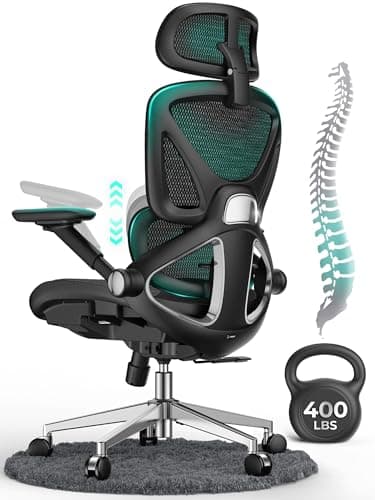 CAPOT Ergonomic Mesh Chair Answers All Six Criteria | Knowing before you buy | 9.8 | $159.99 - View on Amazon #ad disclosure · October 6, 2026 |
| 2 | 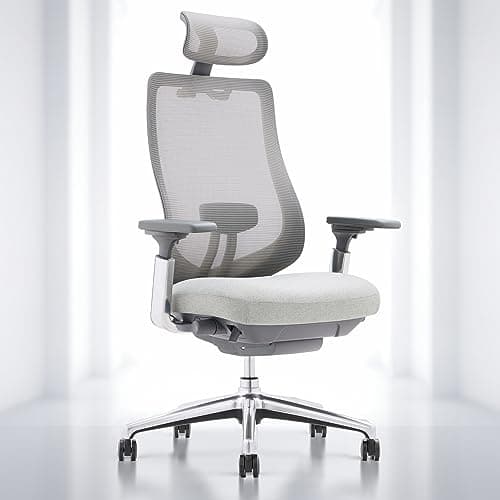 COLAMY Atlas Mesh Chair with 4D Arms and Sliding Seat Only Published Seat Depth That MOVES | A pan that slides 2 in | 8.0 | $289.99 - View on Amazon #ad disclosure · October 6, 2026 |
| 3 | 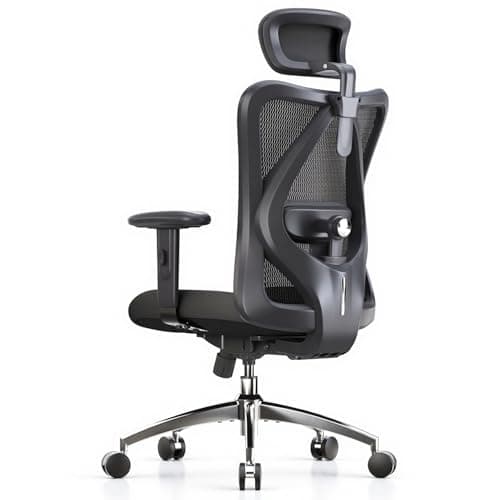 SIHOO M18 Most Searched, Least Published | The gap, illustrated | 6.4 | $125.90 - View on Amazon #ad disclosure · October 6, 2026 |
01 · Answers All Six Criteria
CAPOT Ergonomic Mesh Chair
9.8/10 · scored on the published rubric
The only chair on this site that answers all six rubric criteria from published figures: seat range, depth, width, 400 lb capacity, a five-year warranty and eight levels of 2 in lumbar travel. At $199.99 that is $40 per warranty year.
Why you might not: It tops out at 22.05 in. If you are over about 6 ft 2 in you will run out of seat height, whatever the listing's stated window says.
| Seat height | 18.5-22.05 in |
|---|---|
| Seat depth | 19.3 in |
| Seat width | 20 in |
| Rated capacity | 400 lb |
| Warranty | 5 years |
| Cost per warranty year | $32.00 |
| Maker's stated user height | 5 ft 5 in to 6 ft 2 in |
Adjustments published (5): seat height (18.5-22.05 in); lumbar depth (2 in over 8 levels); backrest lock at 90, 110 and 125 degrees; headrest height and depth; armrests flip up 90 degrees.
How this score was built
- Fit range9/10
- Adjustability10/10
- Capacity headroom10/10
- Materials & warranty10/10
- Spec coverage10/10
The overall is the mean of these, rounded to one decimal place. Each criterion is computed from a published figure - the rubric is here.
02 · Only Published Seat Depth That MOVES
COLAMY Atlas Mesh Chair with 4D Arms and Sliding Seat
8.0/10 · scored on the published rubric
The only chair on this site that publishes a seat depth you can CHANGE - a sliding pan from 15.75 to 17.72 in - which is the one dimension almost every other chair fixes at the factory.
Why you might not: A 21.06 in ceiling is low for a tall user, and COLAMY names a BIFMA certification, a headrest, a lumbar support and 4D arms without publishing a single travel figure for any of them.
| Seat height | 16.73-21.06 in |
|---|---|
| Seat depth | 17.72 in |
| Seat width | 19.88 in |
| Thickness | 6.3 in |
| Rated capacity | 300 lb |
Adjustments published (6): seat height (16.73-21.06 in, Class 4 gas lift); seat depth (sliding seat, 15.75-17.72 in); 4D armrests; 4-position tilt lock with tension adjustment; headrest; lumbar support.
Not published by the manufacturer: warranty term; headrest travel; lumbar travel; armrest travel; recline range in degrees; which BIFMA protocol was passed. We have flagged these rather than guessed.
How this score was built
- Fit range9/10
- Adjustability9/10
- Capacity headroom8/10
- Materials & warranty6/10
- Spec coverage8/10
The overall is the mean of these, rounded to one decimal place. Each criterion is computed from a published figure - the rubric is here.
Price as of October 6, 2026. #ad how this is funded
03 · Most Searched, Least Published
SIHOO M18
6.4/10 · scored on the published rubric
331 lb capacity, a three-year parts warranty and a BIFMA pass with a 1,136 kg static test - and SIHOO states the user-height window it designed for, 5 ft 6 in to 6 ft 2 in.
Why you might not: SIHOO publishes no seat-height range for the M18. That is why it is not a pick on any of our by-body roundups: we cannot tell you whether it fits you, and if you are outside that 5 ft 6 in to 6 ft 2 in window the listing gives you nothing to work with.
| Rated capacity | 331 lb |
|---|---|
| Warranty | 3 years |
| Cost per warranty year | $41.97 |
| Maker's stated user height | 5 ft 6 in to 6 ft 2 in |
Adjustments published (4): seat height; headrest; lumbar support; backrest angle.
Not published by the manufacturer: seat-height range; seat depth; seat width. We have flagged these rather than guessed.
How this score was built
- Fit range3/10
- Adjustability7/10
- Capacity headroom9/10
- Materials & warranty9/10
- Spec coverage4/10
The overall is the mean of these, rounded to one decimal place. Each criterion is computed from a published figure - the rubric is here.
- The CAPOT answers all six of our rubric criteria - the only chair on this site that does. Seat height 18.5-22.05 in, seat depth 19.3 in, seat width 20 in, 400 lb, a named BIFMA X5.1 certification, a five-year warranty, 2 in of lumbar travel over eight levels, a headrest that moves in height and depth, and a recline that locks at 90, 110 and 125 degrees. Nothing here is left to trust.
- The COLAMY Atlas is in this list for one figure nobody else gives: a seat depth you can change, sliding 15.75 to 17.72 in. It also publishes 4D armrests, a BIFMA certification and a seat-height range - and no warranty term, no travel figure for the arms, headrest or lumbar, and no recline in degrees. A strong sheet with a specific hole in it.
- The SIHOO M18 is the most-searched individual chair in this category and publishes no seat-height range at all - no floor, no ceiling, no travel span - nor a seat depth, nor a seat width. It does publish 331 lb, a three-year warranty, a static-load test and a recommended user-height window, which is more than many. The full write-up of that gap.
Note the prices on those cards against the disclosure. The most completely specified chair here is not the most expensive one, which is the single most useful thing this page can tell you: publishing figures is a choice a manufacturer makes, not a feature you pay extra for.
Why we built this page
Because the counts above are the reason this site exists in the shape it does. Every roundup here ranks on one published figure, named at the top of the page, and every pick cites the listing that figure came from. That is only possible because of the tally in the first table - and the tally is also why several pages have six picks rather than twenty, and why some of our "best" chairs are excluded from pages they would otherwise win.
Where a manufacturer publishes nothing, we print the gap rather than filling it. Every product card on this site carries a "not published" list. That list is usually the most useful thing on the card, and this page is the key to reading it. The full rubric and its disqualifiers are here.
Questions people actually ask
What specs matter most when buying an office chair?
What is a normal office chair seat height?
What is a standard office chair seat depth?
Does a 300 lb weight capacity mean anything?
What does 3D or 4D armrest mean?
Why do office chair listings not publish seat depth?
How do you calculate cost per warranty year?
Read next
Sources
Every figure on this page traces to one of these. Product specifications come from the manufacturer's own listing; prices come from a live lookup and carry the date they were verified.
- OSHA eTool, Computer Workstations - Chairs
- OSHA eTool, Computer Workstations - Good Working Positions
- Pheasant & Haslegrave, Bodyspace: Anthropometry, Ergonomics and the Design of Work - percentile table as tabulated by RoyMech
- ANSI/BIFMA X5.1, General Purpose Office Chairs - test summary (Micom Laboratories)
- ANSI/BIFMA X5.11, General Purpose Large Occupant Office Chairs - test summary (Micom Laboratories)