Best office chairs and seat risers for seniors
The figure that matters on a chair for an older user is how high the seat is, because that is what decides how far you have to rise. Almost nobody ranks on it.
By Sawyer V. · Published November 7, 2026
We earn a commission if you buy through the links on this page, at no extra cost to you. It does not affect the order of the picks - the rubric does that, and here is how we are funded. Prices were last verified November 17, 2026.
What we did and did not do
Units we claim to have tested: 0. Everyone in this category says they tested twenty chairs. We have not sat in any of these, and we say so.
What we did instead: compiled every figure each manufacturer publishes, computed the fit ranges from a cited anthropometric table, and linked the source for each number so you can check the arithmetic. Where a manufacturer does not publish a figure, we say that rather than filling the gap. The full method, including what we cannot assess, is here.

The best buy for most older users is not a chair at all - it is a 5 in riser on the chair they already have. Standing up from a seat is a function of how far down it is, and the cushion at rank 1 is the only product in this field that publishes, in inches, how much height it adds. At thirty-five dollars it changes the one figure that matters without changing anything else in the room.
If you want a chair rather than a cushion, buy on the seat-height floor - the lowest setting - not the ceiling. The chair at rank 2 publishes a 19.6 in floor, the highest floor of any task chair on this site, which means even wound all the way down it keeps the knees near 90 degrees instead of below them.
Who should skip both: anyone whose difficulty standing is a medical question rather than a furniture one. This page ranks desk chairs and seat cushions. It does not cover lift chairs, riser recliners or any mobility equipment, and we are not qualified to.
The picks
Ranked on the published rubric. Tap a row for the full write-up; the price button goes straight to Amazon. Every figure in the write-ups is the manufacturer's own published specification, linked at the source. We have not sat in any of these.
| # | Product | Best for | Score | Price |
|---|---|---|---|---|
| 1 | 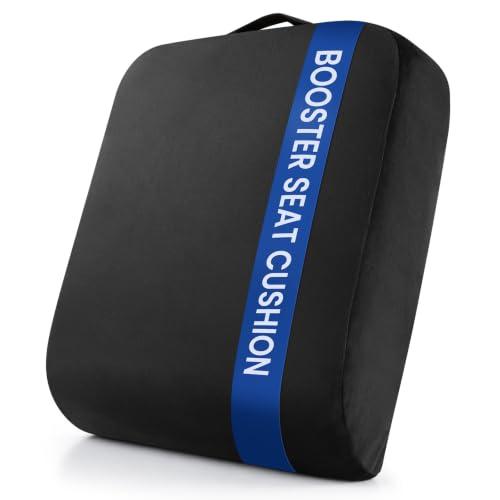 Zantle 002 Adult Booster Seat Cushion, 5 in Best Overall | Raising the chair they already own | 7.4 | $34.99 - View on Amazon #ad disclosure · November 17, 2026 |
| 2 | 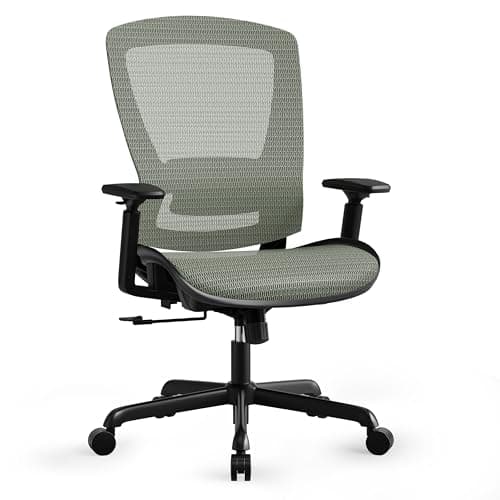 ELABEST T96 Ergonomic Mesh Chair Highest Published Seat | A 19.6 in floor, the highest here | 7.8 | $239.99 - View on Amazon #ad disclosure · November 17, 2026 |
| 3 | 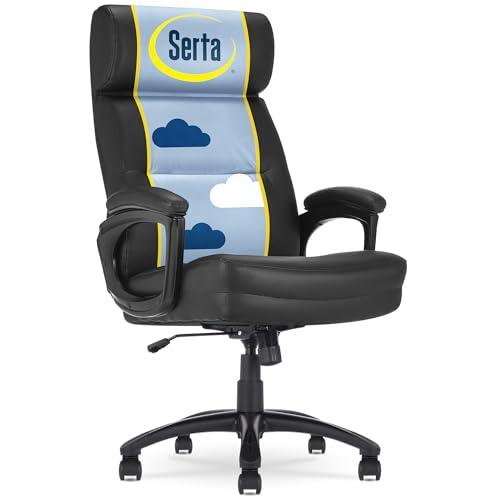 Serta CHR10131A Comfort Executive Chair Best Armrests | Something to push up from, rated to 350 lb | 7.0 | $169.99 - View on Amazon #ad disclosure · November 17, 2026 |
| 4 | 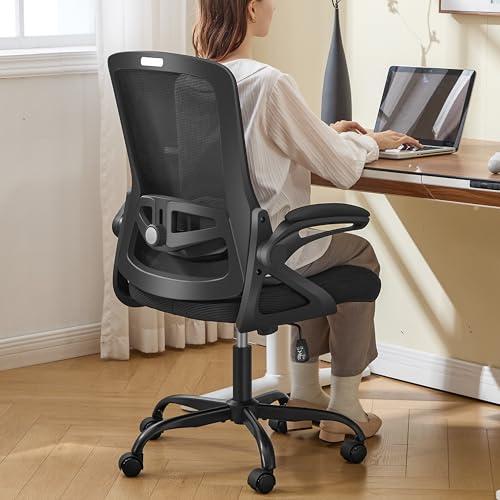 Nexthro 23-1L Mesh Chair with Adjustable Lumbar Best Lumbar Travel | A back that needs support set to it | 8.0 | $119.99 - View on Amazon #ad disclosure · November 17, 2026 |
| 5 | 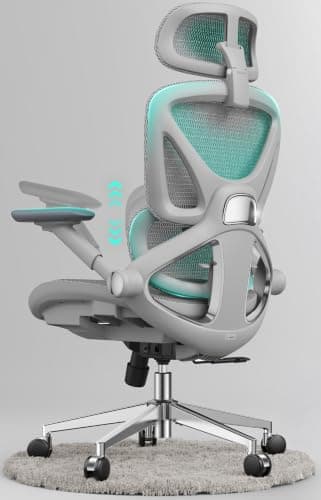 CAPOT OC.018 Ergonomic Mesh Chair Best Warranty | Five published years and 400 lb | 8.6 | $199.99 - View on Amazon #ad disclosure · November 17, 2026 |
| 6 | 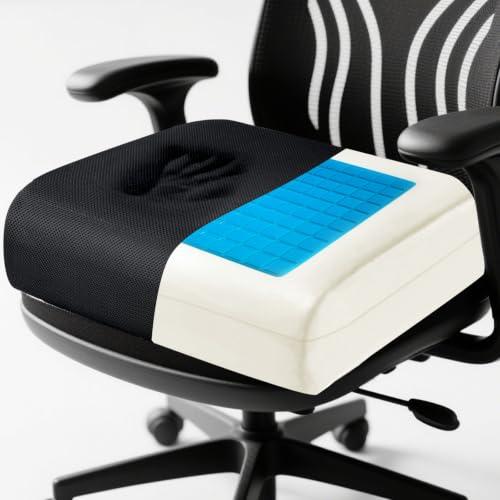 MINUPWELL MP-BSC Booster Seat Cushion, 6 in Best Published Foam Density | A riser that is still 6 in once you sit on it | 7.4 | $38.24 - View on Amazon #ad disclosure · November 17, 2026 |
| 7 | 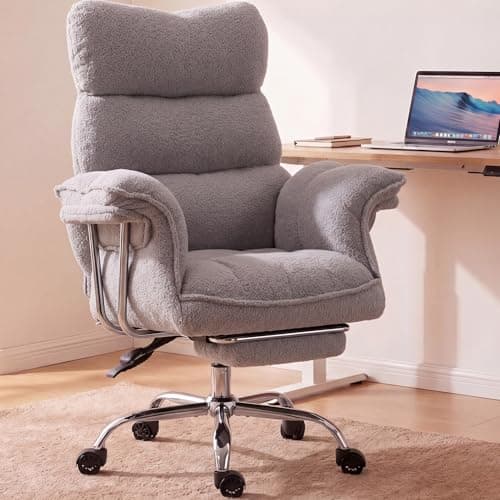 Dowinx Wide-Seat Chair with 8.67 in Armrests Widest Armrest | 8.67 in of arm to push off | 7.4 | $179.99 - View on Amazon #ad disclosure · November 17, 2026 |
01 · Best Overall
Zantle 002 Adult Booster Seat Cushion, 5 in
7.4/10 · scored on the published rubric
Five inches of published added height on a 16 by 20 in dual-layer foam pad with a curved front edge - the only product here that states, in inches, how much higher it puts you.
Why you might not: Five inches is a lot. It lifts a correctly set seat out of position, and unless a footrest goes under the user at the same time it takes their feet off the floor.
| Thickness | 5 in |
|---|---|
| Footprint | 20 x 16 in |
Adjustments published (2): curved front edge; non-slip base.
Not published by the manufacturer: foam density; rated user weight; warranty term. We have flagged these rather than guessed.
How this score was built
- Fit range10/10
- Adjustability6/10
- Capacity headroom6/10
- Materials & warranty7/10
- Spec coverage8/10
The overall is the mean of these, rounded to one decimal place. Each criterion is computed from a published figure - the rubric is here.
Price as of November 17, 2026. #ad how this is funded
02 · Highest Published Seat
ELABEST T96 Ergonomic Mesh Chair
7.8/10 · scored on the published rubric
A 23.6 in ceiling paired with a short 17.7 in seat depth - an unusual combination, and the reason it suits a tall user with a shorter lower leg.
Why you might not: No published capacity and no warranty term, which at this price is a lot of money for two blank rubric rows.
| Seat height | 19.6-23.6 in |
|---|---|
| Seat depth | 17.7 in |
| Seat width | 20 in |
Adjustments published (4): seat height (19.6-23.6 in); 3D armrests (height, width, angle); adjustable lumbar; synchro-tilt.
Not published by the manufacturer: rated capacity; warranty term. We have flagged these rather than guessed.
How this score was built
- Fit range10/10
- Adjustability7/10
- Capacity headroom7/10
- Materials & warranty7/10
- Spec coverage8/10
The overall is the mean of these, rounded to one decimal place. Each criterion is computed from a published figure - the rubric is here.
Price as of November 17, 2026. #ad how this is funded
03 · Best Armrests
Serta CHR10131A Comfort Executive Chair
7.0/10 · scored on the published rubric
Padded armrests on a metal base rated to 350 lb with a seat-side height lever, and the only chair on this site Serta publishes as certified by the American Chiropractors Association.
Why you might not: Serta publishes no seat-height range at all, which is the one figure that decides how hard this chair is to stand up from. It is also 47 lb assembled and the listing asks for two people to build it.
| Rated capacity | 350 lb |
|---|
Adjustments published (3): seat-side height lever; tilt lock; 360-degree swivel on a metal base.
Not published by the manufacturer: seat height range; seat depth; seat width; warranty term; lumbar adjustment. We have flagged these rather than guessed.
How this score was built
- Fit range6/10
- Adjustability6/10
- Capacity headroom9/10
- Materials & warranty9/10
- Spec coverage5/10
The overall is the mean of these, rounded to one decimal place. Each criterion is computed from a published figure - the rubric is here.
Price as of November 17, 2026. #ad how this is funded
04 · Best Lumbar Travel
Nexthro 23-1L Mesh Chair with Adjustable Lumbar
8.0/10 · scored on the published rubric
3.15 in of published vertical lumbar travel - the most of any chair on this site - over a 20.9 by 20.7 in seat with 3.2 in of foam, rated to 400 lb and published for 5 ft 4 in to 6 ft 3 in users.
Why you might not: No published seat-height range. And the 20.7 in seat depth is a liability rather than a feature for a shorter user: it presses the back of the knee unless they sit forward of the backrest.
| Seat depth | 20.7 in |
|---|---|
| Seat width | 20.9 in |
| Thickness | 3.2 in |
| Rated capacity | 400 lb |
| Maker's stated user height | 5 ft 4 in to 6 ft 3 in |
Adjustments published (3): lumbar support, 3.15 in vertically and 1 in fore and aft; flip-up armrests; seat height on a gas lift.
Not published by the manufacturer: seat height range; warranty term; recline range. We have flagged these rather than guessed.
How this score was built
- Fit range6/10
- Adjustability10/10
- Capacity headroom10/10
- Materials & warranty7/10
- Spec coverage7/10
The overall is the mean of these, rounded to one decimal place. Each criterion is computed from a published figure - the rubric is here.
Price as of November 17, 2026. #ad how this is funded
05 · Best Warranty
CAPOT OC.018 Ergonomic Mesh Chair
8.6/10 · scored on the published rubric
The only chair on this site that answers all six rubric criteria from published figures: seat range, depth, width, 400 lb capacity, a five-year warranty and eight levels of 2 in lumbar travel - which also gives it the lowest cost per warranty year of any task chair here.
Why you might not: It tops out at 22.05 in. If you are over about 6 ft 2 in you will run out of seat height, whatever the listing's stated window says.
| Seat height | 18.5-22.05 in |
|---|---|
| Seat depth | 19.3 in |
| Seat width | 20 in |
| Rated capacity | 400 lb |
| Warranty | 5 years |
| Cost per warranty year | $40.00 |
| Maker's stated user height | 5 ft 5 in to 6 ft 2 in |
Adjustments published (5): seat height (18.5-22.05 in); lumbar depth (2 in over 8 levels); backrest lock at 90, 110 and 125 degrees; headrest height and depth; armrests flip up 90 degrees.
How this score was built
- Fit range7/10
- Adjustability8/10
- Capacity headroom10/10
- Materials & warranty9/10
- Spec coverage9/10
The overall is the mean of these, rounded to one decimal place. Each criterion is computed from a published figure - the rubric is here.
06 · Best Published Foam Density
MINUPWELL MP-BSC Booster Seat Cushion, 6 in
7.4/10 · scored on the published rubric
The only cushion on this site that publishes its foam densities - a 50D memory-foam top over a 25D base - which is the figure that decides whether a 6 in pad is still 6 in once you are on it.
Why you might not: Six inches is the tallest pad here. On a chair already set at 20 in it puts the seat at 26 in, which is a counter height, not a desk height.
| Thickness | 6 in |
|---|---|
| Footprint | 18 x 16 in |
Adjustments published (3): carry handle; anti-slip dot-grip base; slight forward incline.
Not published by the manufacturer: rated user weight; warranty term. We have flagged these rather than guessed.
How this score was built
- Fit range9/10
- Adjustability6/10
- Capacity headroom6/10
- Materials & warranty8/10
- Spec coverage8/10
The overall is the mean of these, rounded to one decimal place. Each criterion is computed from a published figure - the rubric is here.
07 · Widest Armrest
Dowinx Wide-Seat Chair with 8.67 in Armrests
7.4/10 · scored on the published rubric
Publishes its armrest width - 8.67 in - which is the figure that decides whether your elbows are clamped, and the only chair here that gives it.
Why you might not: Those armrests are fixed: wide but immovable. A pocket-spring seat and a 400 lb rating come with no published seat width, which is odd on a chair sold on width.
| Rated capacity | 400 lb |
|---|---|
| Footrest | fixed |
Adjustments published (4): recline to 135 degrees; retractable footrest; seat height (SGS-certified cylinder); 360-degree swivel.
Not published by the manufacturer: seat-height range; seat depth; seat width; warranty term; armrest adjustment. We have flagged these rather than guessed.
How this score was built
- Fit range6/10
- Adjustability7/10
- Capacity headroom10/10
- Materials & warranty7/10
- Spec coverage7/10
The overall is the mean of these, rounded to one decimal place. Each criterion is computed from a published figure - the rubric is here.
Why seat height is the whole argument
Rising from a seat is a hinge at the knee and the hip. The lower the seat, the more the knee has to bend before you start, and the more the legs have to do to get you up. Raise the seat an inch and the same movement starts from a shallower angle. That is mechanics, not medicine, and it is the reason every one of these picks is ranked on a published height figure.
The trade is at the other end: a seat that is too high takes the feet off the floor, which is its own problem - the thighs take the whole load on the front edge of the seat and the pelvis rolls back. So the target is not simply higher, it is high enough that the knees are not below the hips and low enough that the feet are flat. The arithmetic is here.
If a riser puts the feet off the floor, the fix is an adjustable footrest under them, not a thinner cushion. An adjustable footrest covering 3.25 to 6.7 in restores the knee angle at whatever height the seat ends up. Ranked here.
Riser or chair: which problem are you solving
| The complaint | What to change | Which pick |
|---|---|---|
| Hard to get out of the chair | Seat height | Rank 1 (+5 in) or rank 2 (19.6 in floor) |
| Nothing to push against | Armrests | Rank 3 or rank 7 (8.67 in wide) |
| Ache low in the back after an hour | Lumbar position | Rank 4 (3.15 in of travel) |
| Chair feels unsteady or creaks | Rated capacity and base | Rank 5 (400 lb, 5-year warranty) |
| Riser flattens under them | Published foam density | Rank 6 (50D over 25D) |
The armrest is doing more work than it looks
Watch anybody stand from a chair with arms and they push through the arms, not the legs. Which makes two published figures worth checking before you buy: how wide the armrest pad is - rank 7 publishes 8.67 in, the widest on this site, and a wider pad spreads the load across the forearm rather than one point on the wrist - and whether the arms are fixed or flip up.
On this page, fixed is better. Flip-up arms are a space-saving feature sold for tucking a chair under a desk; an arm that can fold is an arm you can lean on wrong. If the chair you are looking at has flip-up arms, that is not a reason to reject it, but it is worth knowing which way they move.
What about a drafting chair
It is the obvious thought - drafting chairs publish the highest seats on this site, 24 to 34 in - and it is usually the wrong answer here. Those chairs are built to meet a standing desk, so at those heights the feet are nowhere near the floor and the published foot ring is doing the work instead. Fine at a 42 in desk, wrong at a 29 in one.
If the desk genuinely is counter height, then yes, that is the right category and it is ranked here. At a normal desk, a riser on a normal chair gets you the same 5 in with the feet still down.
How we ranked these
- Fit - published seat-height floor, or published added height on a riser. The governing figure on this page.
- Adjustability - countable published mechanisms: height, lumbar travel, armrest movement, tilt lock.
- Capacity headroom - published rated capacity. Two chairs here publish 400 lb and one 350 lb; headroom is what keeps a base from flexing.
- Materials and build - published warranty, base material, foam specification.
- Spec coverage - how much the maker publishes. One chair here publishes a certification and a capacity but no seat height at all, which costs it heavily on a page ranked on seat height.
What to avoid
A deep, soft seat. A plush seat you sink into lowers you further than its stated height and gives nothing back when you push to stand. Firm sits higher than soft at the same published measurement.
A riser over about 5 in on a chair that was already correct. Six inches is a lot of lift: it puts a 20 in seat at 26 in, which is a counter height. Buy the thickness you need, not the thickest one listed.
Any chair that publishes no seat-height range. Several good-looking chairs publish an overall height, a capacity and a certification and never say how high the seat is. On this page that is the product.
What we have not done
We have not used any of these products. Every height, capacity and warranty figure here is copied from the manufacturer's published specification with the listing linked on each card, and the prices come from a live lookup carrying the date they were verified.
We have no clinical standing and this page makes no health claim. The description of what seat height does to the effort of standing is geometry. If standing up is becoming difficult, that is a conversation for a clinician, and no cushion on this page is a substitute for one. Our published limits are here.
Questions people actually ask
What is the best office chair for a senior?
Should I buy a riser cushion or a new chair?
How high should the seat be?
Do armrests matter for getting out of a chair?
Is a drafting chair good for an older user?
What about a lift chair or riser recliner?
Will a thick cushion flatten under someone?
Read next
Sources
Every figure on this page traces to one of these. Product specifications come from the manufacturer's own listing; prices come from a live lookup and carry the date they were verified.