CAPOT ergonomic mesh chair: the only fully-specified chair here
Seat 18.5-22.05 in, 19.3 in deep, 20 in wide, 400 lb, five years, 2 in of lumbar travel over eight levels. Every rubric criterion, answered.
By Sawyer V. · Published September 30, 2026
We earn a commission if you buy through the links on this page, at no extra cost to you. It does not affect the order of the picks - the rubric does that, and here is how we are funded. Prices were last verified September 30, 2026.
What we did and did not do
Units we claim to have tested: 0. Everyone in this category says they tested twenty chairs. We have not sat in any of these, and we say so.
What we did instead: compiled every figure each manufacturer publishes, computed the fit ranges from a cited anthropometric table, and linked the source for each number so you can check the arithmetic. Where a manufacturer does not publish a figure, we say that rather than filling the gap. The full method, including what we cannot assess, is here.
Of every product on this site, this is the one whose listing answers every question our rubric asks. That is rare enough to be the story.
| Criterion | What CAPOT publishes |
|---|---|
| 1. Fit range | Seat height 18.5-22.05 in; seat 19.3 in deep, 20 in wide; stated user window 5 ft 5 in to 6 ft 2 in |
| 2. Adjustability | 5 named systems: seat height, lumbar depth (2 in over 8 levels), backrest lock at 90/110/125 degrees, headrest height and depth, armrests flip up 90 degrees |
| 3. Capacity headroom | 400 lb on a stainless steel base - 125 lb above the X5.1 occupant basis |
| 4. Footrest provision | None. Not applicable to a task chair, and stated rather than implied |
| 5. Materials and warranty | Leak-proof SGS gas lift, stainless steel base, BIFMA X5.1 certified, 5-year warranty |
| 6. Cost per warranty year | Computable - live price divided by five years; see the card below |
For contrast: two chairs on this site publish no weight capacity at all, four big-and-tall chairs publish nothing but a capacity number, and the most-searched chair in the category publishes no seat-height range. Completeness is not the norm.
What the numbers mean for fit
Run our arithmetic against the published figures rather than against the marketing.
Seat height 18.5 to 22.05 in. Our table puts a 5 ft 6 in user at 16.9-18.5 in and a 6 ft 2 in user at 19.5-21.1 in. So the floor is at the very bottom of a 5 ft 6 in user's band and the ceiling has about an inch of headroom above a 6 ft 2 in user - which matches CAPOT's own stated window closely. That consistency is a good sign: the company has done the same sum.
Seat depth 19.3 in. Our maximum for a given stature is buttock-popliteal length minus 2 in of clearance, which puts 19.3 in at roughly 5 ft 8 in and above. Under about 5 ft 7 in, this seat is too deep - and no adjustment changes that. The stated window starts at 5 ft 5 in, which on our arithmetic is slightly optimistic on depth.
Above 6 ft 2 in you run out of seat height. 22.05 in is the ceiling, full stop. Chairs for tall people ranks on exactly that, and the GABRYLLY in the card below reaches 23.6 in with a 20 in seat depth.
The lumbar figure is the one worth paying for
2 inches of lumbar travel over eight levels, stated to align with the L1-L5 region. Almost nothing else in this price band publishes a lumbar adjustment range at all - most say "adjustable lumbar support" and stop.
Why that matters: a fixed molded bump supports whoever happens to have their lumbar curve at that height. Two inches of travel over eight steps means you can put it at yours. OSHA's own chair guidance asks for a lumbar support that is height adjustable so it can be appropriately placed to fit the lower back - this is a chair that meets the specification rather than gesturing at it. It is why the CAPOT tops our back-pain page.
One caveat worth keeping: CAPOT's own copy attaches percentage claims to the lumbar system - a stated reduction in lower-back pressure and in fatigue. Those are the manufacturer's numbers, not ours, we cannot verify them, and we are not repeating them as though they were specifications. The 2 inches over 8 levels is the checkable part.
The five-year warranty, and the arithmetic it unlocks
Five years with 60 months of free parts. Two things follow.
First, it is a manufacturer putting its own money behind the durability question we cannot assess. We cannot tell you whether the mesh slackens or the cylinder holds pressure in year three - but a company offering five years of parts has made a commercial estimate, and that is worth more than our speculation.
Second, it makes cost per warranty year computable, which is the one metric on this site that no competitor in our fetched set publishes. At the live price shown in the card below, this chair produces the best figure of any chair here.
What we still cannot tell you
A complete specification is not the same as a tested product, and it would be dishonest to let the table above imply otherwise. We have not sat in this chair. We do not know:
- Whether an 8-hour day in it is comfortable, which is CAPOT's own headline claim.
- Whether the mesh tension holds, or when the frame edge starts to become a pressure point.
- Whether the lumbar mechanism's eight positions are usefully distinct or nominally so.
- How the armrest flip mechanism ages.
- Whether assembly is the stated 30 minutes.
Publishers who own the units can answer all of that and we cannot. If those factors decide your purchase, read their reviews too - we would rather point you at them than pretend. Our full list of what this method cannot reach is here.
The chair, and the two it does not suit
Ranked on the published rubric. Tap a row for the full write-up; the price button goes straight to Amazon. Every figure in the write-ups is the manufacturer's own published specification, linked at the source. We have not sat in any of these.
| # | Product | Best for | Score | Price |
|---|---|---|---|---|
| 1 | 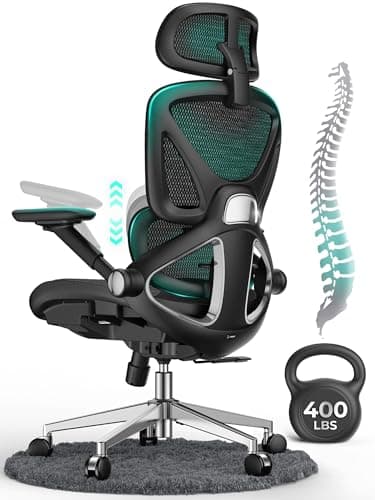 CAPOT Ergonomic Mesh Chair The Chair Under Review | 5 ft 5 in to 6 ft 2 in | 9.8 | $199.99 - View on Amazon #ad disclosure · September 30, 2026 |
| 2 | 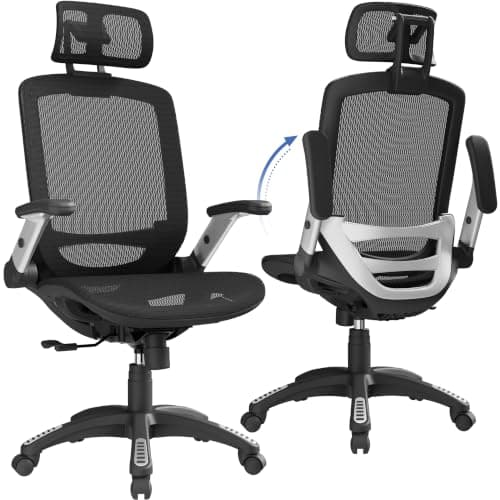 GABRYLLY Ergonomic Mesh Office Chair The Alternative for a Taller User | A 23.6 in ceiling | 8.6 | $219.50 - View on Amazon #ad disclosure · September 30, 2026 |
| 3 | 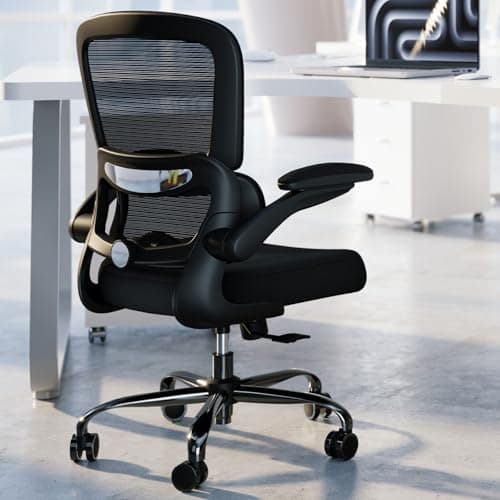 TRALT Ergonomic Chair with Adjustable Lumbar The Alternative for a Shorter User | A 17.3 in seat depth | 8.8 | $119.99 - View on Amazon #ad disclosure · September 30, 2026 |
01 · The Chair Under Review
CAPOT Ergonomic Mesh Chair
9.8/10 · scored on the published rubric
The only chair on this site that answers all six rubric criteria from published figures: seat range, depth, width, 400 lb capacity, a five-year warranty and eight levels of 2 in lumbar travel. At $199.99 that is $40 per warranty year.
Why you might not: It tops out at 22.05 in. If you are over about 6 ft 2 in you will run out of seat height, whatever the listing's stated window says.
| Seat height | 18.5-22.05 in |
|---|---|
| Seat depth | 19.3 in |
| Seat width | 20 in |
| Rated capacity | 400 lb |
| Warranty | 5 years |
| Cost per warranty year | $40.00 |
| Maker's stated user height | 5 ft 5 in to 6 ft 2 in |
Adjustments published (5): seat height (18.5-22.05 in); lumbar depth (2 in over 8 levels); backrest lock at 90, 110 and 125 degrees; headrest height and depth; armrests flip up 90 degrees.
How this score was built
- Fit range9/10
- Adjustability10/10
- Capacity headroom10/10
- Materials & warranty10/10
- Spec coverage10/10
The overall is the mean of these, rounded to one decimal place. Each criterion is computed from a published figure - the rubric is here.
Price as of September 30, 2026. #ad how this is funded
02 · The Alternative for a Taller User
GABRYLLY Ergonomic Mesh Office Chair
8.6/10 · scored on the published rubric
Five of six rubric criteria answered with published figures: 18.9-23.6 in seat, 20.5 in wide, 20 in deep, 300 lb, three-year warranty. Its 23.6 in ceiling is the highest of any ordinary task chair here, which is what makes it the tall-user pick.
Why you might not: A 20 in seat depth is long. Our arithmetic says that is too deep for anyone under about 5 ft 8 in - the front edge will reach the back of your knees, which is the thing OSHA specifically tells you to avoid.
| Seat height | 18.9-23.6 in |
|---|---|
| Seat depth | 20 in |
| Seat width | 20.5 in |
| Rated capacity | 300 lb |
| Warranty | 3 years |
| Cost per warranty year | $73.17 |
| Maker's stated user height | 5 ft 2 in to 6 ft 1 in |
Adjustments published (4): seat height (18.9-23.6 in); flip-up armrests (45 degrees); recline 90-120 degrees; headrest.
Not published by the manufacturer: lumbar adjustment range. We have flagged these rather than guessed.
How this score was built
- Fit range10/10
- Adjustability8/10
- Capacity headroom8/10
- Materials & warranty8/10
- Spec coverage9/10
The overall is the mean of these, rounded to one decimal place. Each criterion is computed from a published figure - the rubric is here.
03 · The Alternative for a Shorter User
TRALT Ergonomic Chair with Adjustable Lumbar
8.8/10 · scored on the published rubric
A 17.3 in seat depth is the shortest published here, and our arithmetic says that is what makes it work for shorter users - it clears the back of the knee down to about 5 ft 2 in.
Why you might not: A 21.7 in ceiling rules it out above roughly 6 ft, and TRALT states lumbar adjustment without saying how far it travels.
| Seat height | 17.7-21.7 in |
|---|---|
| Seat depth | 17.3 in |
| Seat width | 19.7 in |
| Rated capacity | 330 lb |
| Warranty | 2 years |
| Cost per warranty year | $60.00 |
| Maker's stated user height | 5 ft 4 in to 6 ft 2 in |
Adjustments published (3): seat height (17.7-21.7 in); adjustable lumbar; BIFMA Class 3 gas cylinder.
Not published by the manufacturer: lumbar travel in inches. We have flagged these rather than guessed.
How this score was built
- Fit range10/10
- Adjustability8/10
- Capacity headroom9/10
- Materials & warranty8/10
- Spec coverage9/10
The overall is the mean of these, rounded to one decimal place. Each criterion is computed from a published figure - the rubric is here.
Price as of September 30, 2026. #ad how this is funded
Questions people actually ask
What is the CAPOT ergonomic chair seat height?
Is the CAPOT chair good for tall people?
How much lumbar adjustment does it have?
What is the CAPOT chair weight capacity?
Is the seat too deep for a short person?
Have you tested this chair?
Read next
Sources
Every figure on this page traces to one of these. Product specifications come from the manufacturer's own listing; prices come from a live lookup and carry the date they were verified.
- CAPOT ergonomic mesh chair - manufacturer's published specification on the Amazon listing
- ANSI/BIFMA X5.1, General Purpose Office Chairs - test summary (Micom Laboratories)
- Pheasant & Haslegrave, Bodyspace: Anthropometry, Ergonomics and the Design of Work - percentile table as tabulated by RoyMech
- OSHA eTool, Computer Workstations - Chairs